Are you an accountant or bookkeeper constantly juggling tasks? From meticulously crafting journal entries to deciphering complex reports for clients, and managing a constant stream of emails, your days can often feel like a race against the clock.
Imagine having a dedicated assistant who works tirelessly, providing instant support whenever you need it. This isn’t a fantasy; it’s the reality offered by advanced AI tools like ChatGPT. They aren’t here to replace human expertise but to empower you, boosting efficiency and freeing up your valuable time.

So, what exactly is ChatGPT, and why should finance professionals pay attention? ChatGPT is a powerful artificial intelligence that understands and generates human-like text. For bookkeepers and accountants, this means practical assistance with everyday operations.
It can handle tasks like drafting journal entries, summarizing financial reports, composing professional emails, and answering common client inquiries. Leveraging such a tool helps you streamline workflows, reduce manual effort, and work smarter, not harder.
Streamlining Journal Entries with AI
Creating journal entries traditionally demands careful thought, ensuring accurate debits and credits for every transaction. But with AI, this process transforms into something incredibly simple and fast.
One of the most powerful applications demonstrating how to use large language models for journal entries is their ability to simplify this often complex task. You can simply provide a natural language prompt, such as, “Generate a journal entry for $1,200 rent paid on May 1st from the bank.”
In mere seconds, the AI presents the correct entry, eliminating guesswork and saving significant time. Whether it’s for rent, sales, payroll, or other transactions, you can complete your entries more quickly and with greater confidence.
Simplifying Client Report Explanations
Many clients find financial reports intimidating and struggle with the intricate details. They typically want a clear, concise overview of their financial health, not a deep dive into every line item.
Instead of spending precious time translating complex data, you can now paste a report into ChatGPT and ask for a summary of the key findings. The AI will generate an easy-to-understand explanation that you can readily share with your clients.
This approach not only simplifies your workload but also enhances client understanding and strengthens their trust in your services.
Effortless Professional Email Composition
Writing professional emails, especially follow-ups or reminders, often consumes a surprising amount of your day. ChatGPT can dramatically cut down this time, helping you draft polished messages in moments.
Simply type a request like, “Draft a reminder email for missing receipts.” The AI will instantly generate a professional email for you.
From thank-you notes and deadline reminders to general follow-ups, you’ll always have the perfect wording at your fingertips, ensuring consistent and timely communication.
Answering Client Questions Swiftly
Clients frequently ask similar questions, such as, “Why is my profit different from my bank balance?” or “Do I need to keep every single receipt?” Crafting unique responses each time can be tedious.
With ChatGPT, you can generate clear, concise answers to these recurring queries quickly. You can even save these responses as templates for future use.
This efficiency allows you to respond promptly and professionally, saving you considerable time throughout your day.
Seamless Integration with Popular Accounting Software
If you currently use accounting platforms like QuickBooks Online or Xero, ChatGPT proves to be an invaluable co-pilot. It seamlessly complements these tools, helping you interpret reports, clarify transactions, or summarize activities within the software.
You don’t need to be a tech guru; simply ask your question, and ChatGPT will provide clear guidance. This integration helps you maximize the utility of your existing accounting systems.
Embracing smart tools like ChatGPT positions you as a forward-thinking professional. You’ll complete tasks faster, serve clients more effectively, and open doors to new growth opportunities.
Adopting AI in your practice is a strategic move for career advancement. It saves time, reduces stress, and elevates the quality of service you provide.

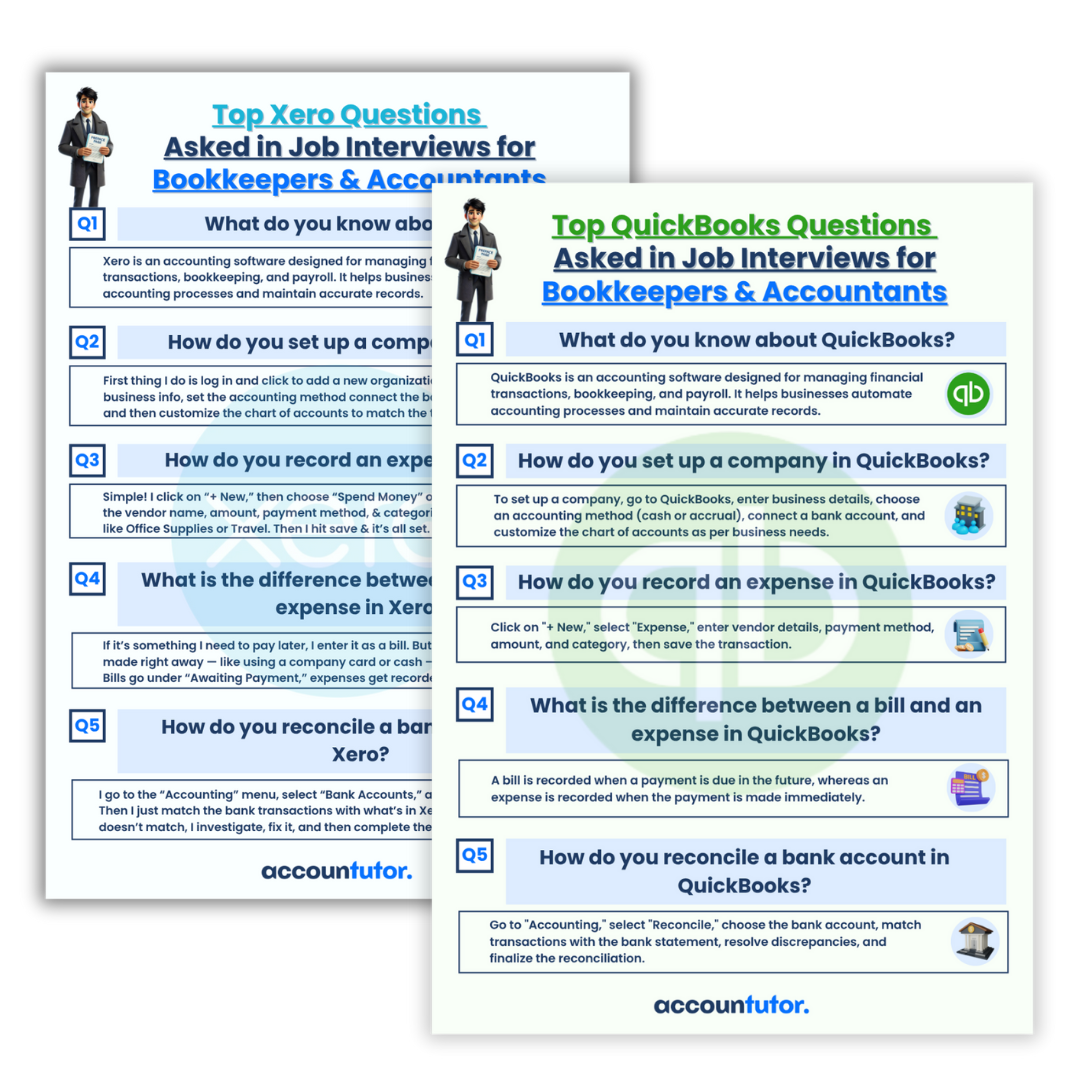
Many resources are available to help you master these skills, including practical guides on QuickBooks and Xero interview questions. These resources cover real-world tasks like recording expenses and reconciling accounts.
Whether you are new to the field or experienced, understanding these questions helps you articulate your skills confidently. It prepares you for what employers seek in today’s dynamic financial landscape.
Frequently Asked Questions (FAQ)
Q: Can large language models like ChatGPT replace bookkeepers?
A: No, large language models are powerful tools designed to assist, not replace, human professionals. They automate repetitive tasks, allowing bookkeepers to focus on more complex analysis and client relationships.
Q: How can ChatGPT help with journal entries?
A: You can provide ChatGPT with a transaction description in natural language. It will then generate the correct debit and credit entries, significantly speeding up the journal entry process and reducing errors.
Q: Is it safe to put client financial data into ChatGPT?
A: When using any AI tool with sensitive data, it’s crucial to prioritize privacy and security. Always anonymize data where possible and use secure, compliant versions of these tools if handling confidential client information. Never input personally identifiable information or raw, sensitive financial data into public AI models.
Q: Can ChatGPT integrate with my existing accounting software?
A: While ChatGPT doesn’t directly integrate to post transactions, it can work alongside software like QuickBooks Online and Xero. It helps you understand reports, explain transactions, or summarize data generated by these systems.
Q: What are the main benefits of using AI for bookkeeping tasks?
A: The primary benefits include increased efficiency, reduced manual errors, significant time savings on repetitive tasks, enhanced client communication, and the ability to focus on higher-value analytical work.
Keywords: large language models, journal entries, bookkeeping, ChatGPT, AI for accounting, financial reports, email automation, QuickBooks, Xero, accounting efficiency