ChatGPT has rapidly transformed the accounting landscape. Many accounting firms now depend on this powerful AI to ensure compliance, automate routine tasks, and even tackle complex data analysis. This versatile tool also helps with highly personalized client communications. Let’s explore 13 effective ways you can leverage ChatGPT to significantly boost your firm’s efficiency.
What Exactly is ChatGPT?
ChatGPT is a sophisticated large language model that offers an interactive chat interface. It has become one of the most widely adopted AI tools within accounting and finance teams. Unlike traditional software that relies on fixed commands, ChatGPT allows you to use casual, conversational prompts.
This AI can automate numerous manual and repetitive tasks. It excels at generating text like client emails, summarizing lengthy documents, personalizing responses to client inquiries, assisting with research on regulatory updates, proofreading text for improvements, and even brainstorming innovative ideas.
How ChatGPT Can Elevate Accounting Firms
1. Reduce Manual Workloads
ChatGPT takes on tedious tasks, freeing up your team for more strategic, high-level work. Imagine it writing email replies, analyzing journal entries, drafting blog posts, or preparing financial reports. This significantly increases productivity.
For instance, ChatGPT can quickly identify discrepancies between invoiced amounts and purchase orders. By providing the right data and context, you can prompt it with commands like, ‘Can you help automate the process of checking discrepancies between invoiced amounts and purchase orders?’

In mere seconds, ChatGPT can analyze complex financial data, a task typically prone to human error and time-consuming. The right prompt makes this process remarkably simple and accurate.
2. Enhance Client Interactions
Improving client experience is crucial, and ChatGPT contributes significantly here. It ensures uniform responses, lending a professional and consistent tone to all your firm’s communications. This fosters trust and reliability.
Moreover, ChatGPT delivers responses in seconds, which is incredibly valuable during busy periods. It can draft emails, helping you maintain prompt and professional communication with clients, partners, and vendors.
While it might not always provide a perfect response, ChatGPT serves as an excellent starting point, allowing you to refine and personalize as needed for an improved client experience.
3. Support Training and Ongoing Learning
Staying current with new accounting concepts, evolving regulations, and emerging technologies can be challenging. ChatGPT acts as a valuable learning assistant in this regard.
It excels at providing clear explanations and examples to deepen comprehension of complex topics. You can also generate hypothetical scenarios or case studies for analysis and interpretation. Furthermore, ChatGPT offers insights into specialized areas like forensic accounting, tax planning strategies, or risk management techniques, supporting continuous professional development.
Practical Applications for ChatGPT in Accounting Firms
1. Craft Engaging Blog Posts
While you shouldn’t rely on ChatGPT to write entire blog posts, it’s an excellent assistant for content creation. Use it to brainstorm article ideas, create detailed outlines, check for grammatical errors, and get valuable SEO suggestions.
To avoid generic content, employ specific prompts that define your desired voice and tone. For example, you could instruct it: ‘Write in an authoritative yet informal and conversational voice, focusing on actionable business advice for accounting and growth.’

When you ask ChatGPT to rewrite a draft with such a prompt, you’ll receive a result that resonates more strongly with your audience, offering a distinctive writing style.

2. Draft Personalized Client Emails
Firm owners can leverage ChatGPT to quickly draft personalized emails for clients. Develop a set of prompts that include essential information like the client’s first name, industry, email purpose, and any specific concerns or calls to action.
A simple prompt like, ‘Write a professional yet casual email reminder to a client about an upcoming quarterly tax return deadline, asking them to submit necessary documentation,’ can generate a draft in seconds. You then simply edit it to fit your needs.

3. Convert Loom Videos into SOPs
Many firms use Loom for internal communication and reducing meetings. You can take this a step further by using ChatGPT to create Standard Operating Procedures (SOPs) from your Loom videos.

Simply copy and paste the video’s transcript into ChatGPT and ask it to summarize the content into a step-by-step SOP. This streamlines documentation and training processes.
4. Transform PDF Data into Excel Tables
Converting data from PDF files into an Excel-ready format often requires significant manual effort. ChatGPT streamlines this process dramatically.
You can copy and paste the relevant data from your PDFs directly into ChatGPT and instruct it to format the information into a table. With the introduction of GPT-4, you can now directly upload files, making this conversion even more convenient.
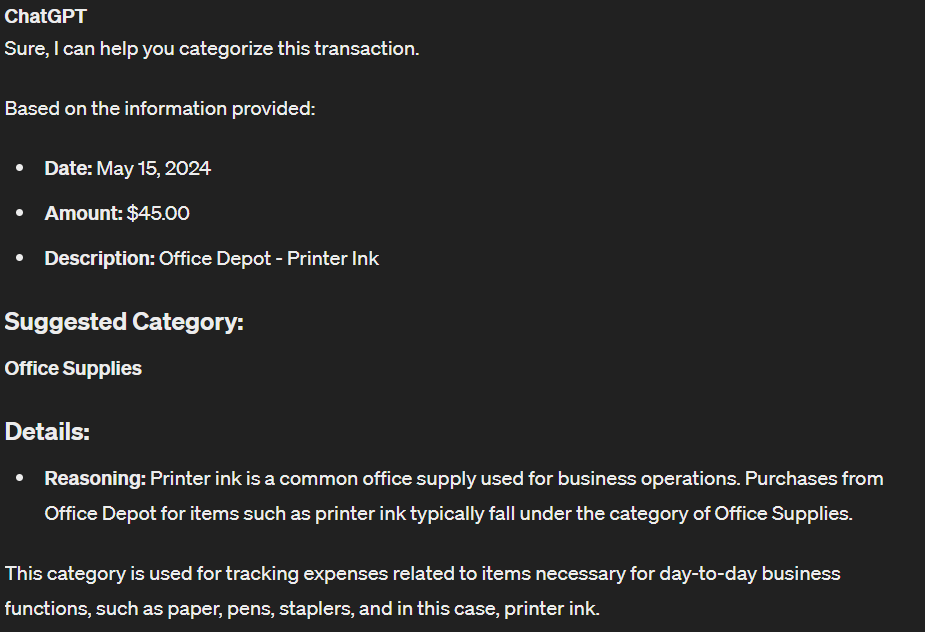
5. Categorize Uncategorized Bank Transactions
ChatGPT can revolutionize bookkeeping by reviewing transactions and suggesting appropriate categories. This significantly speeds up the process and enhances accuracy.
For **best practices for ChatGPT for expense tracking**, input transaction details into the chatbox and let ChatGPT provide categorization suggestions. You can then accept or adjust these as needed, ensuring your records are always up-to-date and correctly classified.
6. Generate Engaging Social Media Posts
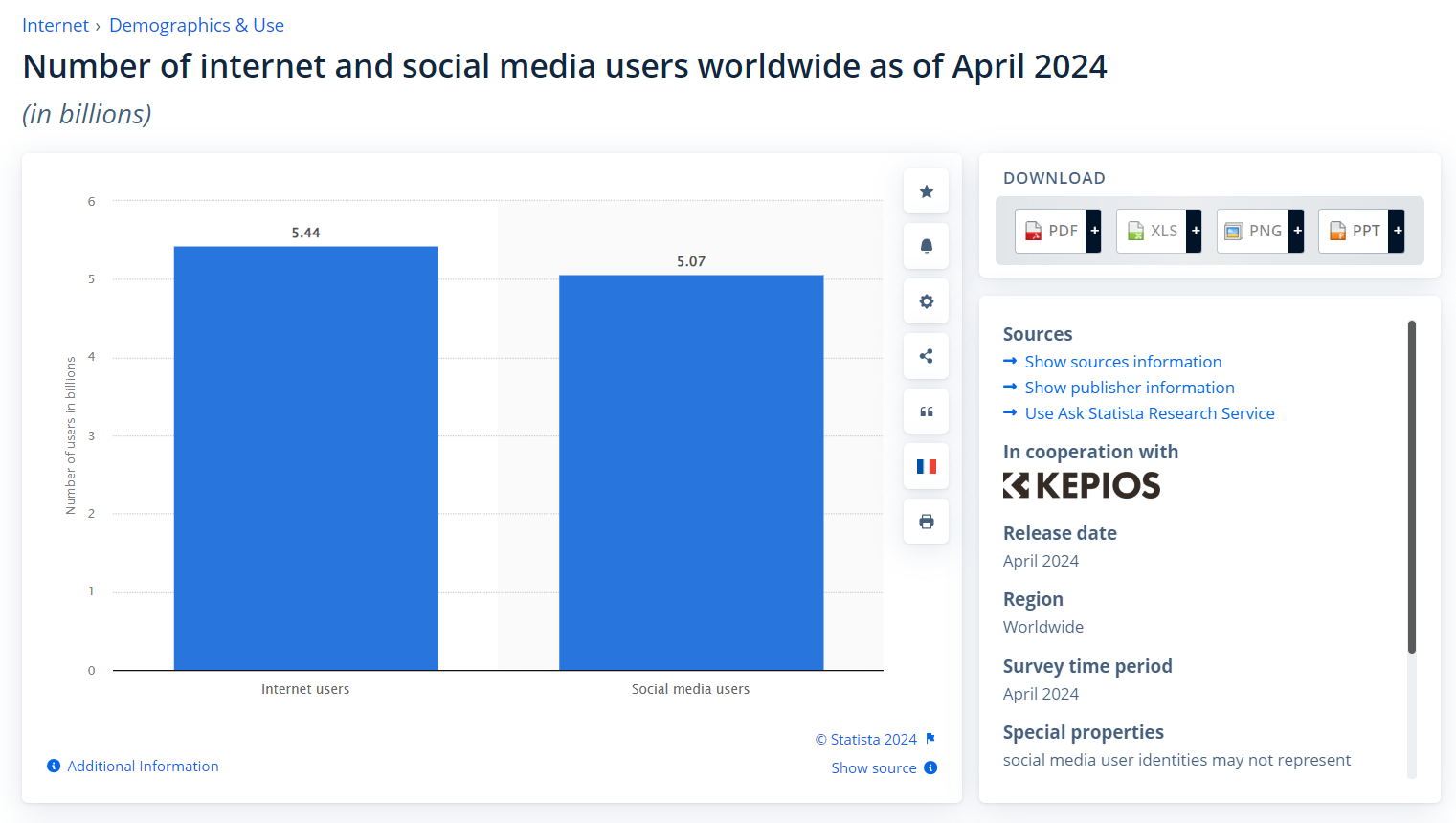
Building an online presence through social media demands a constant stream of fresh, engaging content. With billions of people on social media, establishing your firm’s presence is essential.
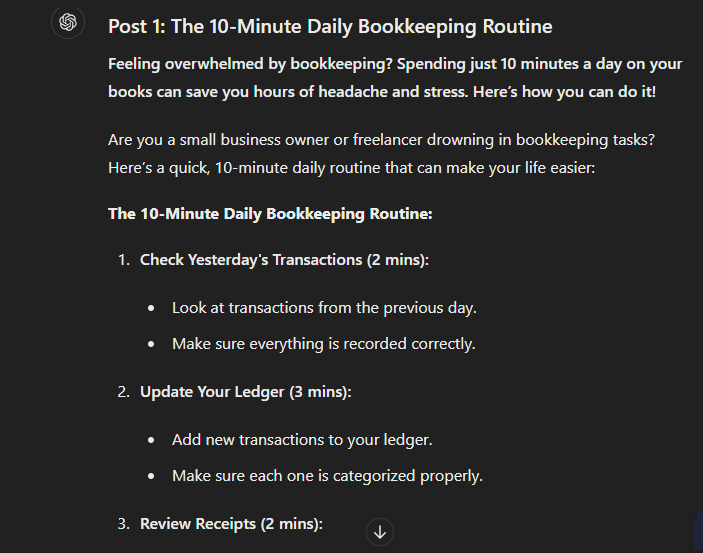
ChatGPT can create social media posts that are engaging, relevant, and perfectly tailored to your target audience. You can refine prompts, tone, and other aspects to achieve the best results, always remembering to add a human touch through editing.
7. Summarize Meeting Notes Efficiently
ChatGPT excels at summarizing meeting notes, saving valuable time. Start by recording your meetings using a tool with transcription capabilities, like Loom. If your tool doesn’t transcribe, use a separate transcription service.
Once you have the transcription, input it into ChatGPT with a prompt such as, ‘Summarize the following meeting notes, focusing on key decisions, action items, and important points discussed: [Paste transcribed text here].’

8. Resolve Excel Formula Issues
When you forget a specific Excel formula or need help with its input, ChatGPT can provide step-by-step instructions. Simply describe the task or calculation you’re trying to perform, and ChatGPT will offer the appropriate formula.

This feature significantly accelerates your financial reporting process. For even more advanced assistance, explore custom GPTs designed for Excel tasks, though some may have limitations for free users.

9. Expedite Market Research
ChatGPT can drastically cut down your market research time. It summarizes reports and articles, answers specific questions about provided content, generates insights from data, and recommends additional resources.
For example, to perform a competitor analysis, collect competitor names, news articles, financial reports, and press releases. Provide this data to ChatGPT and instruct it to summarize. You can then ask targeted questions to gain deeper insights.

Paid ChatGPT plans, like ChatGPT 4.5, offer even deeper research capabilities.

10. Optimize Email Signatures for Advertising
Your email signature is an often-overlooked yet powerful marketing tool for your accounting firm. It offers a subtle way to advertise your services with every email sent.
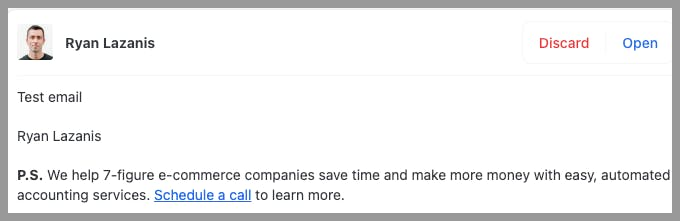
If you’re unsure what to include, ChatGPT can generate a list of creative ideas for your email signature. For instance, ask, ‘Can you send me a list of possible email CTAs for an accounting firm targeting SaaS startups?’

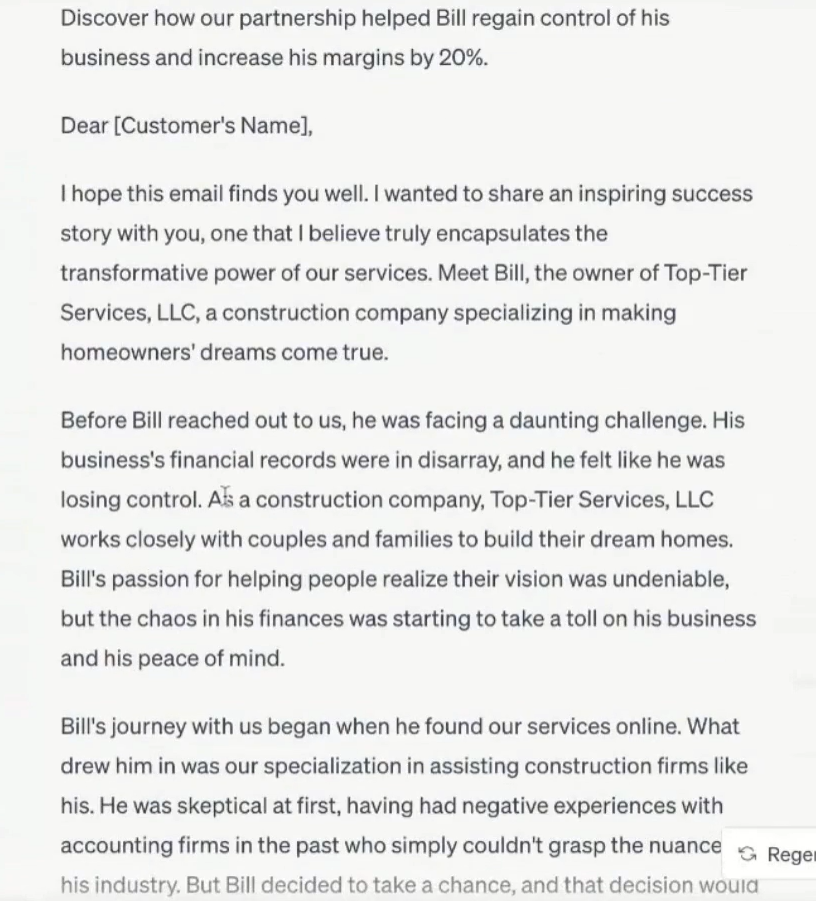
11. Create Stronger Case Studies
Case studies are highly effective marketing tools because they intricately detail how your services benefit clients. ChatGPT can significantly assist in drafting these compelling narratives.
Provide specific details in your prompt about your clients, the challenges they faced, and how your firm successfully resolved them. ChatGPT will then generate a draft, which you can refine for maximum impact.
12. Summarize Information for Executive Reports
Using ChatGPT to summarize information for monthly executive summaries streamlines the reporting process, ensuring clarity and conciseness. Always anonymize sensitive information to protect privacy before inputting data.
First, gather all relevant data like financial statements, KPIs, budget analyses, and significant financial events. Next, prepare your input by clearly labeling each data section. Then, input your organized data and prompts into ChatGPT, specifying the desired tone and length for the summary.
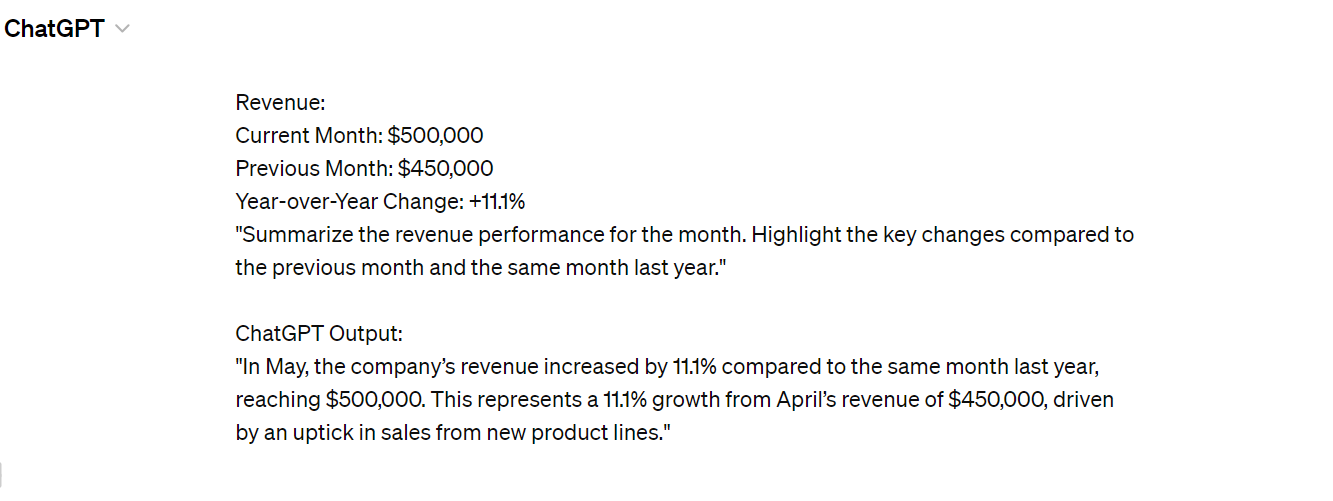
Always review the generated summary carefully for accuracy and completeness, making any necessary adjustments to align with your expectations.
13. Simplify Complex Tax Regulations
Tax regulations are notoriously complex, but ChatGPT can help interpret them and provide digestible summaries. This makes it easier for accountants to understand and apply the rules effectively.
For example, you can use a prompt like, ‘Can you summarize Section 179 of the new tax regulations regarding small business deductions in a more digestible manner?’
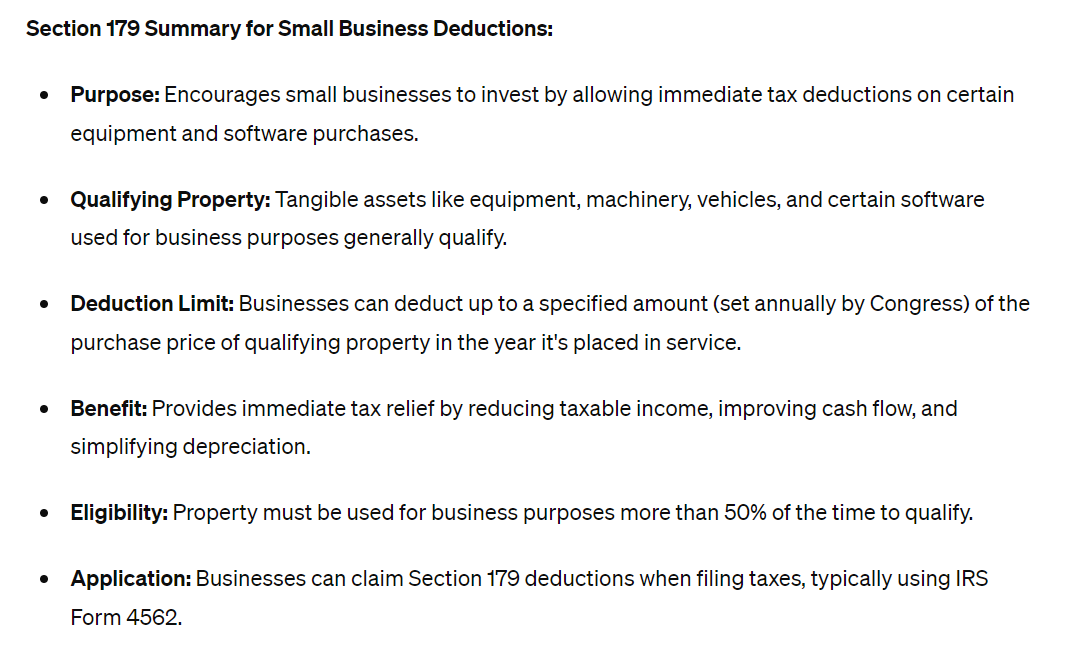
Beyond summaries, ChatGPT can also assist with computations. You can ask it to calculate tax liabilities by providing details like annual revenue, expenses, depreciation, and applicable tax rates.
Potential Risks of Using ChatGPT in Accounting

AI Errors
A significant risk with ChatGPT and other AI tools in accounting is the potential for errors without human oversight. While AI processes vast amounts of data and generates insights, it can still make mistakes that might go unnoticed without manual review. Always verify critical information.
Generic Results
ChatGPT is a machine learning tool; without sufficient human input and specific prompts, it often produces generic content. Relying solely on AI for marketing or communication can result in bland, unengaging material. Human refinement is key to creating distinctive content.
Data Security Concerns
Security risks are associated with inputting financial and other sensitive information into any AI model. Always be cautious about the data you share. Ensure you understand the platform’s data privacy policies and anonymize sensitive information whenever possible.
Frequently Asked Questions About ChatGPT in Accounting
Q1: Can ChatGPT completely replace human accountants?
No, ChatGPT cannot fully replace human accountants. While it automates many repetitive tasks and assists with analysis, human expertise remains crucial for critical thinking, complex problem-solving, ethical judgment, and personalized client relationships.
Q2: How accurate is ChatGPT for financial calculations and reporting?
ChatGPT can assist with calculations and data formatting, but its accuracy depends heavily on the quality of the input and the prompt. Always verify any financial calculations or reports generated by AI with human oversight to ensure compliance and correctness.
Q3: What are the best practices for writing effective ChatGPT prompts for accounting tasks?
For effective prompts, be specific and provide context. Clearly define the task, specify the desired format (e.g., table, summary, email), and include any relevant background information or data. Experiment with different phrasings to get the best results.
Q4: Is it safe to input sensitive client financial data into ChatGPT?
It is generally not recommended to input sensitive or confidential client financial data directly into public ChatGPT models due to data security and privacy concerns. Always anonymize data or use enterprise-level AI solutions with robust security protocols if handling sensitive information.
Q5: Can ChatGPT integrate with existing accounting software?
Currently, direct, native integrations with most accounting software are limited for standard ChatGPT. However, you can often use copy-paste functions or leverage APIs (if available for your software and ChatGPT version) to transfer data or utilize its functions with your existing systems.
Keywords: ChatGPT accounting, AI for finance, expense tracking, accounting automation, firm efficiency, client communication AI, tax regulation simplification, market research AI, accounting software AI, ChatGPT prompts