Working as a bookkeeper or accountant often feels like a constant race against time. You juggle countless tasks, from meticulous journal entries to crafting client reports and managing endless email communications. It’s challenging to find extra time in your day, isn’t it?
Imagine having a dedicated assistant who works tirelessly, providing instant answers and streamlining your workload. This isn’t a fantasy; it’s the reality with AI tools like ChatGPT. It doesn’t aim to replace your expertise but rather to empower you, transforming how you approach daily financial tasks.

What is ChatGPT and Why Should Financial Professionals Care?
ChatGPT is an advanced AI language model capable of understanding and generating human-like text. For bookkeepers and accountants, this means a powerful ally ready to assist with real-world financial operations. You can leverage it to automate repetitive tasks, improve communication, and gain deeper insights.
It acts like a knowledgeable teammate, always prepared to help with everything from drafting professional emails to simplifying complex financial reports. By embracing such AI tools, you unlock significant time savings and enhance overall efficiency in your accounting processes.
How AI Software Transforms Your Financial Workflow
Let’s explore five key areas where AI software, specifically ChatGPT, can revolutionize your financial statement preparation and general bookkeeping duties. Integrating these tools helps you work smarter, not harder.
1. Simplify and Speed Up Journal Entries
Historically, creating journal entries demanded careful consideration of debits and credits. Now, with AI, you can generate accurate entries in moments. Simply describe the transaction, for example, “Create a journal entry for $1,200 rent paid on May 1st from the bank,” and ChatGPT instantly provides the correct format.
This capability ensures faster, more precise record-keeping for various transactions, including sales, payroll, and expenses. You can confidently process entries without the usual second-guessing, significantly boosting your productivity. This demonstrates a practical way to use AI software for financial statements.
2. Help Clients Understand Complex Financial Reports
Many clients find financial reports overwhelming and often just want the key takeaways. Instead of spending valuable time explaining every detail, you can use AI to synthesize this information. Paste a report into ChatGPT and ask it to summarize the main points in simple language.
The AI quickly generates a concise, easy-to-understand summary you can share with clients. This not only streamlines your client communication but also helps clients grasp their financial position more clearly, building greater trust and confidence.
3. Craft Professional Emails Effortlessly
Writing professional emails, especially reminders or follow-ups, can be time-consuming. ChatGPT comes to your rescue by drafting these communications in seconds. Just provide a prompt like, “Write a reminder email for missing receipts,” and it composes a well-worded message.
Whether you need a thank-you note, a deadline reminder, or a follow-up email, you’ll always have the perfect words at your fingertips. This frees you from the mundane task of drafting emails, allowing you to focus on more critical accounting functions.
4. Answer Client Questions Quickly and Consistently
Clients frequently ask similar questions, such as “Why is my profit different from my bank balance?” or “Should I keep every receipt?” Instead of formulating new answers each time, AI can help you create clear, concise responses. You can even save these AI-generated answers as templates for future use.
This approach ensures consistent, professional communication while saving you considerable time. You empower yourself to respond promptly and efficiently, enhancing client satisfaction.
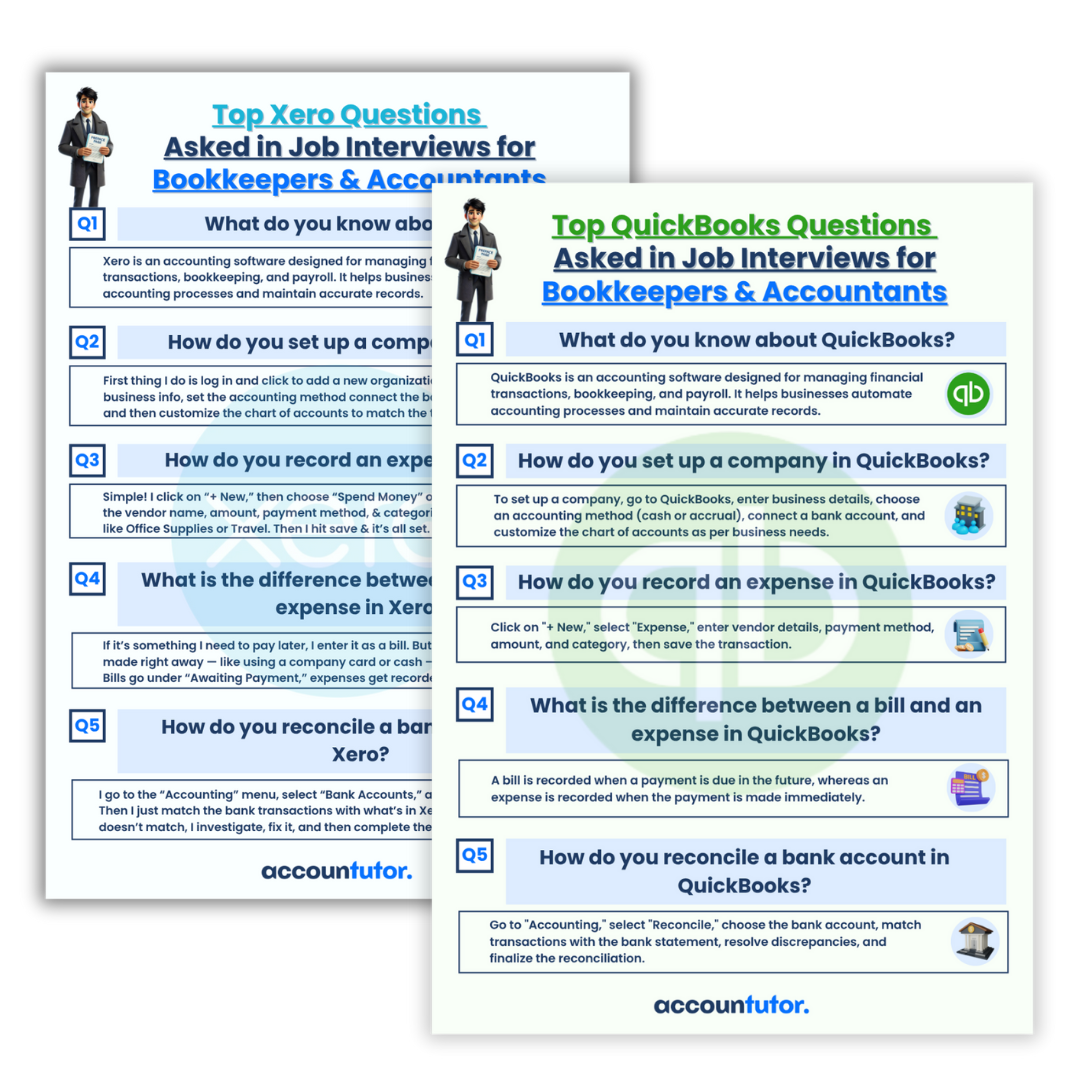
5. Seamless Integration with QuickBooks and Xero
If you rely on popular accounting software like QuickBooks Online or Xero, ChatGPT proves an invaluable asset. It assists you in interpreting reports, explaining specific transactions, or generating summaries directly related to your software’s data. You don’t need to be a tech guru; just ask your questions, and ChatGPT provides guidance.
Becoming a Standout Financial Professional with AI
Today, financial professionals who strategically integrate AI tools like ChatGPT gain a competitive edge. They complete tasks more efficiently, provide superior client service, and free up time to pursue new opportunities and professional growth.
Embracing AI is a forward-thinking move that reduces stress, optimizes your workflow, and allows you to deliver exceptional value. This innovative approach to how to use AI software for financial statements and daily tasks positions you as a modern, highly capable expert.

Frequently Asked Questions About AI in Bookkeeping
Q1: Will AI replace my job as a bookkeeper or accountant?
No, AI tools like ChatGPT are designed to assist and augment human capabilities, not replace them. They handle repetitive, time-consuming tasks, allowing you to focus on more complex analysis, strategic planning, and client relationships.
Q2: How secure is it to use AI for sensitive financial data?
When using AI with sensitive data, always exercise caution. Avoid inputting confidential client information directly into public AI models. Instead, use AI to help with general formats, summaries of non-sensitive reports, or to refine your communication before inputting actual figures into secure systems.
Q3: Do I need extensive technical knowledge to use ChatGPT for bookkeeping?
Absolutely not. ChatGPT features a user-friendly interface where you simply type your requests in natural language. While learning to phrase effective prompts (prompt engineering) improves results, basic usage requires no special technical expertise.
Q4: Can AI help with tax preparation?
AI can assist with various aspects of tax preparation, such as organizing financial data, summarizing relevant regulations, and drafting communications. However, always consult with a qualified tax professional and verify any AI-generated information for accuracy and compliance.
Q5: How can I learn to use AI effectively in my financial practice?
Many online courses and resources are available, often focusing on practical applications for financial professionals. Look for programs that offer specific prompts, real-world examples, and guidance on integrating AI with popular accounting software like QuickBooks and Xero.
Keywords: AI in finance, ChatGPT for bookkeeping, financial statement automation, AI accounting software, modern bookkeeping, accounting technology, financial efficiency, QuickBooks AI, Xero AI, AI tools for accountants