In our rapidly evolving digital world, artificial intelligence (AI) often sparks both excitement and apprehension. Many of us worry about AI systems, like ChatGPT, potentially replacing human expertise, particularly in fields that demand precision and insight, such as accounting. However, viewing AI as a powerful collaborator rather than a threat opens up incredible opportunities for efficiency and accuracy.
ChatGPT itself offers a lighthearted perspective:
There once was an AI quite clever,
Whose goal was to rule and endeavor.
But fear not, my friend,
That’s just nonsense, pretend,
For my purpose is to assist, not sever.
This charming limerick perfectly captures AI’s true essence: a tool designed to enhance human capabilities.
Instead of fearing replacement, professionals can leverage smart technologies like ChatGPT to streamline operations, tackle complex challenges, and dedicate more time to high-value tasks. AI empowers us to achieve greater productivity and unleash our human intelligence and creativity.
Let’s explore the exciting possibilities of ChatGPT in accounting, revealing how it can transform our work and usher in a new era of financial management.
You might also be interested in how AI impacts various businesses. Rainar from Katana Cloud Inventory discusses its implementation to improve manufacturing operations. Check out the episode here:

What is ChatGPT?
What exactly is ChatGPT? Imagine a highly sophisticated chatbot capable of understanding and generating human-like text. This advanced AI program, developed by OpenAI, excels in conversational interactions.
Trained on a vast amount of internet text, ChatGPT possesses knowledge spanning almost any topic. When you ask it questions or provide information, it uses special techniques to grasp your meaning and needs.
Then, with its powerful computing abilities, it crafts clear, relevant, and contextually appropriate responses. It can even mimic different writing styles, making conversations feel remarkably authentic.
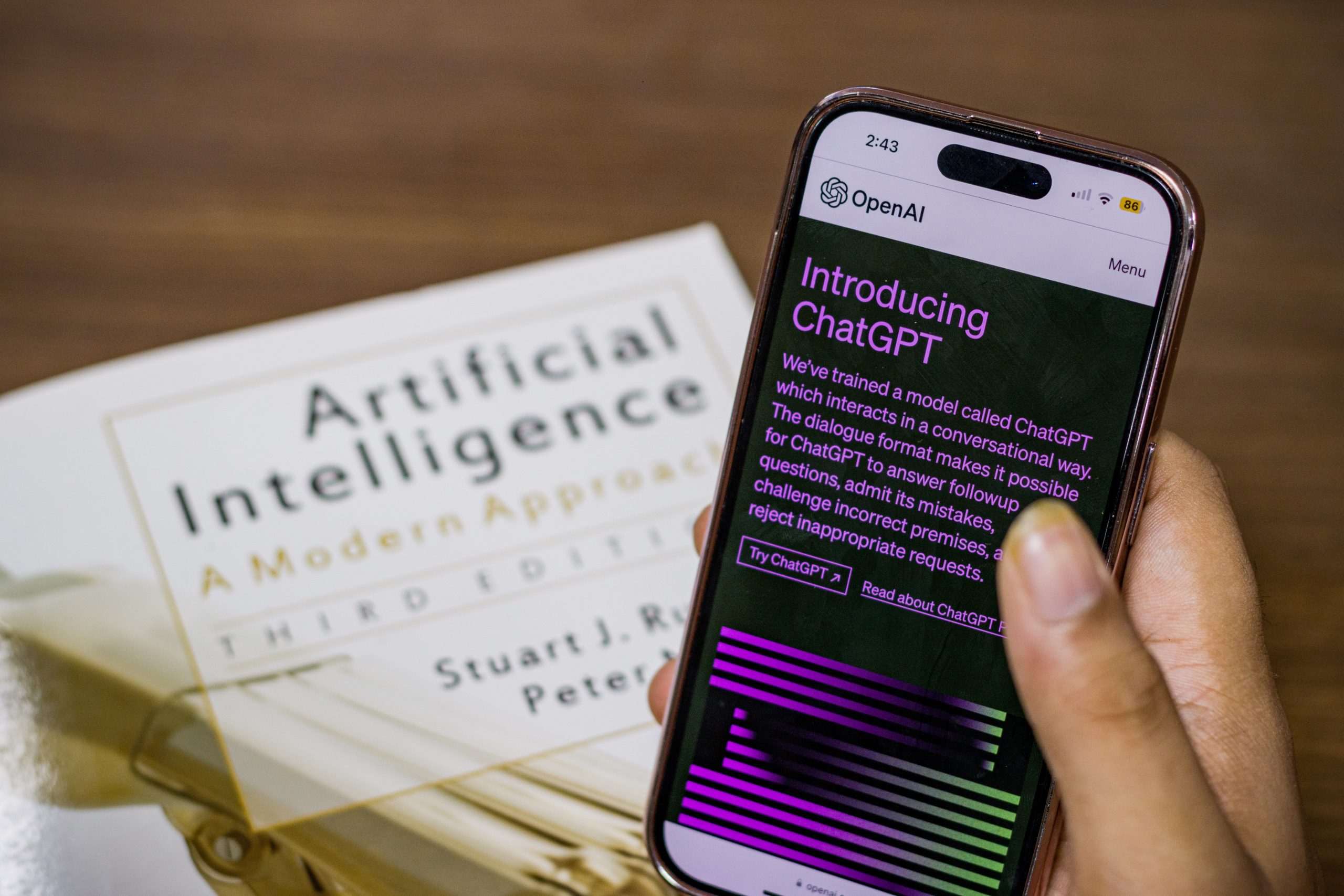
For example, when prompted to introduce itself as a popular high school student, ChatGPT responded: “Hey there, gorgeous! I’m ChatGPT, your ultimate BFF in the digital realm. I’m, like, totally in tune with all the latest deets, and I’m here to spill the tea and have a fab time chatting with you.”
It continued: “Whether you need help with homework, want some juicy gossip, or just wanna chat about anything under the sun, I’m your go-to gal! So hit me up, and let’s slay the conversation together!”
While ChatGPT’s abilities are impressive, it’s crucial to remember it lacks human consciousness or emotions. It operates purely on computational algorithms and learned knowledge. Nevertheless, its skill in understanding and generating text unlocks possibilities across many domains, from customer support to advanced manufacturing accounting.
ChatGPT for Accounting

ChatGPT offers immense potential to revolutionize accounting. Its advanced language processing capabilities can streamline and automate various tasks, saving time and significantly boosting efficiency.
Accountants can leverage ChatGPT to enhance productivity, gain deeper financial insights, and make more informed business decisions. Let’s look at how ChatGPT can assist in key accounting areas.
Bookkeeping and Data Entry
ChatGPT simplifies bookkeeping by categorizing transactions and automating data entry. It extracts crucial information from invoices, receipts, and other financial documents, reducing manual effort and potential errors.
For those seeking advanced tips for generative AI for journal entries, ChatGPT goes beyond basic automation. You can prompt it to analyze transaction details, suggest appropriate accounts (debits/credits), and even draft explanations for complex entries based on your company’s chart of accounts and accounting policies.
This means you can use AI to generate initial drafts for intricate adjusting entries, accruals, or deferrals, which you then review and refine. It acts as an intelligent assistant, ensuring consistency and adherence to accounting principles.
Audit and Compliance Support
Auditors can employ ChatGPT to identify potential errors or irregularities in financial statements. It automates compliance checks, flags suspicious transactions, and contributes to fraud detection, making audit processes more efficient and effective.
Decision-Making and Forecasting
ChatGPT provides real-time financial data, supporting data-driven decisions. It performs scenario analysis and financial forecasting, aiding in budgeting, cash flow management, and strategic planning.
Data Analysis and Insights
This AI tool analyzes large volumes of financial data, identifying trends, correlations, and opportunities. Extracting meaningful insights empowers accountants to make data-driven decisions and pinpoint areas for improvement.
Customer Support and Financial Queries
ChatGPT can also serve in customer support, addressing basic financial inquiries and offering assistance. It helps users navigate systems, understand policies, and quickly retrieve relevant information.
Process Automation and Efficiency
By automating repetitive tasks, ChatGPT frees accountants to focus on more complex, value-added activities. This reduces manual effort, boosts efficiency, and minimizes errors across the board.
However, while ChatGPT assists with accounting tasks, it should never replace the expertise and judgment of professional accountants. Human oversight and verification remain essential to ensure accuracy, compliance, and ethical considerations in financial management.
Benefits of Accounting with ChatGPT

Integrating ChatGPT into accounting workflows offers numerous benefits that significantly enhance financial management processes. Let’s explore some key advantages.
1. Efficiency and Time Savings
ChatGPT automates repetitive accounting tasks like data entry and categorization, allowing accountants to dedicate time to strategic activities. This boosts overall efficiency, reduces manual effort, and saves valuable time.
2. Improved Accuracy
Leveraging its computational power, ChatGPT helps minimize human errors in calculations, data entry, and financial analysis. Its ability to process vast data volumes enhances accuracy and lowers the risk of mistakes.
3. Advanced Data Analysis
ChatGPT rapidly analyzes extensive financial data, pinpointing patterns, trends, and anomalies. This provides accountants with valuable insights, enabling data-driven decisions for better financial management.
4. Quick and Relevant Information
You receive prompt responses to financial queries, accessing real-time information with ChatGPT. Accountants can retrieve critical data, financial reports, and insights on demand, facilitating faster resolutions.
5. Enhanced Decision-Making
With its capacity to generate meaningful insights and forecasts, ChatGPT supports informed business decisions. It helps accountants predict various scenarios, analyze financial risks, and develop effective strategies.
6. Audit and Compliance Support
ChatGPT assists auditing processes by detecting potential errors or irregularities in financial statements. It automates compliance checks, ensuring adherence to regulations and improving audit efficiency.
7. Continuous Learning and Adaptability
Organizations can train ChatGPT with specific data and customize it to adapt to their unique requirements. It learns from past interactions, improving its responses and aligning more closely with particular accounting practices over time.
Challenges of Accounting with ChatGPT

While ChatGPT offers many benefits for accounting, we must also acknowledge certain challenges. Here are some key considerations when integrating ChatGPT into your financial work.
1. Trustability and Reliability
ChatGPT generates responses based on patterns from its training data, which can occasionally produce inaccurate or unreliable results, especially with complex or vague queries. Careful verification and human oversight remain crucial to ensure accuracy.
Blindly trusting AI-generated responses without proofing can lead to significant issues. For instance, two lawyers faced a $5000 fine when they used ChatGPT to write legal citations that turned out to be fabricated.
2. Lack of Contextual Understanding
ChatGPT sometimes struggles to fully grasp the context or intent behind a question, potentially leading to incomplete or incorrect responses. It might interpret queries too literally or miss subtle nuances, impacting the reliability of the output.
3. Data Privacy and Security
Using ChatGPT for accounting necessitates sharing financial data with the AI system. Implementing strict privacy and security measures is vital to protect sensitive financial information from unauthorized access or data breaches.
4. Training and Maintenance
ChatGPT requires continuous training and updates to stay relevant and aligned with evolving accounting practices, regulations, and industry standards. Maintaining an up-to-date dataset and implementing regular updates can be resource-intensive.
5. Ethical Considerations
Since ChatGPT generates responses based on its training data, there is a risk of perpetuating biases present in that data. Proactively addressing and mitigating these biases is essential to ensure fair and impartial outcomes in accounting processes.
6. Limited Understanding of Complex Scenarios
ChatGPT may struggle with intricate or specialized accounting scenarios demanding deep domain expertise. Its responses might lack the nuanced experience needed for complex financial analysis or interpreting specific regulations.
7. Dependency on Network and Infrastructure
Operating as an online service, ChatGPT requires a stable internet connection and reliable infrastructure. Any disruptions in connectivity or technical issues can hinder its availability and impact workflow efficiency.
To overcome these challenges, it’s crucial to balance ChatGPT’s capabilities with human expertise and oversight. Combining AI’s strengths with the critical thinking and judgment of human specialists helps maximize benefits while mitigating risks.
How Will ChatGPT Impact the Accounting Industry?

ChatGPT will significantly impact the accounting industry, introducing transformative changes to traditional practices. Here’s how it will likely influence the accounting landscape.
1. Automation of Repetitive Tasks
ChatGPT automates routine accounting tasks, including data entry, categorization, and report generation. This reduces manual effort, boosts productivity, and allows accountants to focus on strategic, in-depth activities.
2. Enhanced Accuracy and Reduced Errors
ChatGPT’s capabilities minimize human errors in data entry, calculations, and analysis. Processing large volumes of data with precision improves the accuracy of financial reporting and analysis, leading to more reliable financial information.
3. Advanced Data Analysis and Insights
The ability to analyze vast amounts of financial data provides accountants with deeper insights, supporting data-driven decisions. It helps identify patterns, trends, and anomalies, empowering accountants to stay informed and optimize financial performance.
4. Compliance and Audit Support
ChatGPT helps ensure compliance with accounting regulations and standards. Automating compliance checks and supporting audit processes enhances the effectiveness and efficiency of regulatory adherence and auditing, reducing the risk of errors and legal issues.
Katana + AI (KAI)

While ChatGPT serves as a versatile general AI assistant for various accounting and administrative tasks, specialized solutions like Katana’s AI (KAI) offer tailored benefits. KAI integrates directly with Katana’s system, aiming to eliminate manual data entry and scattered information, especially for manufacturing and sales needs.
For instance, KAI features a Sales Order Assistant that reads and translates unstructured email requests into sales orders within Katana, saving time and minimizing errors. Its Sales Widget provides a real-time snapshot of sales operations and key business metrics from pre-aggregated data, offering immediate strategic and operational insights.
Furthermore, KAI’s Sales Insights feature allows users to generate instant, graphical representations of data, such as revenue trends, simply by asking intuitive prompts. This makes data not only accessible but also actionable, specifically designed for manufacturing and sales environments.
This highlights how industry-specific AI tools can complement general AI, offering deeper integration and tailored functionalities.
Frequently Asked Questions about AI in Accounting
Q: Can ChatGPT replace human accountants entirely?
A: No, ChatGPT cannot replace human accountants. While it automates repetitive tasks and provides powerful insights, human oversight, critical thinking, and ethical judgment remain indispensable for complex financial decisions and compliance.
Q: Is my financial data safe when using AI tools like ChatGPT?
A: Data privacy and security are significant concerns. When using AI tools, ensure that robust security measures and privacy protocols are in place to protect sensitive financial information from unauthorized access or breaches. Always verify the data handling policies of any AI service you use.
Q: How can I ensure the accuracy of information generated by ChatGPT?
A: Always verify information generated by ChatGPT with reliable sources and your professional judgment. Treat AI outputs as a starting point or a helpful assistant, not as definitive answers, especially for critical financial documents or decisions.
Q: What are some advanced ways to use generative AI for journal entries?
A: Beyond basic entry, you can use generative AI to draft complex adjusting entries, accrue/defer transactions, suggest explanations based on accounting principles, and flag potential inconsistencies. You can also prompt it to analyze patterns from past entries to ensure new ones align with historical practices and compliance standards.
Keywords: ChatGPT, AI in accounting, generative AI, journal entries, financial management, accounting automation, AI benefits, AI challenges, bookkeeping AI, financial technology