
Transform Your Bookkeeping: A Checklist for Generative AI for Bank Reconciliation and More
As a bookkeeper or accountant, you know the daily grind. You constantly juggle journal entries, decipher reports, draft emails, and follow up with clients. It often feels like a race against the clock, leaving little room for anything else. But what if a powerful tool could help you streamline these tasks, making your work faster and more efficient? Enter generative AI, specifically tools like ChatGPT. It’s not here to replace your expertise; it’s here to empower you, acting as your 24/7 intelligent assistant.
What is ChatGPT, and Why Does It Matter for Bookkeepers?
ChatGPT is an advanced AI model that comprehends natural language and generates coherent, helpful responses. For bookkeepers and accountants, this translates into practical assistance with real-world tasks. Imagine simplifying journal entries, crafting professional emails, summarizing complex financial reports, and providing quick answers to client queries. Instead of manual processes, ChatGPT helps you save valuable time and work with greater ease.
Think of it as adding a knowledgeable teammate to your firm, always ready to assist with accounting challenges. This intelligent partner helps you manage your workload more effectively and efficiently.
How Generative AI Streamlines Your Bookkeeping Operations
1. Simplifying and Speeding Up Journal Entries
Creating journal entries often demands careful thought to ensure correct debits and credits. With generative AI, you simply describe the transaction. For example, type, “Create a journal entry for $1,200 rent paid on May 1st from the bank.” The AI instantly provides the correct entry. This applies to various transactions, from sales and payroll to expenses, helping you complete entries faster and with confidence.
2. Making Financial Reports Understandable for Clients
Many clients find financial reports overwhelming and primarily want to grasp the key takeaways. Instead of spending extensive time on explanations, you can paste the report into ChatGPT. Ask it to summarize the main points in simple language. This produces an easy-to-understand summary you can share, enhancing client confidence and simplifying your communication.
3. Effortlessly Writing Professional Emails
Drafting emails, especially reminders and follow-ups, can be time-consuming. ChatGPT helps you generate professional emails in mere seconds. Just prompt it with something like, “Write a reminder email for missing receipts,” and it creates the message for you. Whether it’s a thank-you note, a deadline reminder, or a follow-up, you always have the right words at your fingertips.
4. Answering Client Questions Swiftly
Clients frequently ask similar questions, such as “Why is my profit different from my bank balance?” or “Do I need to keep every receipt?” Instead of formulating new answers each time, use ChatGPT to generate concise, clear responses. You can even save these as templates for quick, professional replies, saving considerable time.
5. Enhancing QuickBooks and Xero Accounting Workflows
If you use QuickBooks Online or Xero, generative AI is an excellent companion. It helps you interpret reports, explain transactions, or even summarize activities within your software. You don’t need to be a tech expert; simply ask your question, and ChatGPT guides you through the process.
The Critical Role of a Checklist for Generative AI for Bank Reconciliation
Beyond daily tasks, generative AI offers significant potential for complex processes like bank reconciliation. To maximize efficiency and accuracy, having a robust **checklist for generative AI for bank reconciliation** is essential. This ensures you cover all steps, from data input and discrepancy identification to validation and reporting. A well-structured checklist guides your AI implementation, ensuring compliance and precision.
Such a checklist might include steps like defining data sources, setting parameters for anomaly detection, establishing review protocols, and ensuring human oversight. It helps integrate AI seamlessly into your reconciliation process, boosting reliability and speed.
Become the Modern Bookkeeper Everyone Wants to Hire
Today, bookkeepers who leverage smart tools like generative AI truly stand out. They complete work faster, provide superior client service, and create more opportunities for growth. If you aim to advance your career, embracing AI tools like ChatGPT is a strategic move. You’ll reduce stress, save time, and offer an elevated level of service to your clients.
Boost Your Skills and Confidence with Expert Resources
Ready to make your work smarter and easier? Platforms like Accountutor.com offer specialized courses, such as “ChatGPT for Bookkeepers and Accountants,” designed specifically for you. They also provide practical training on QuickBooks Online, Xero Accounting, and Bookkeeping Basics.
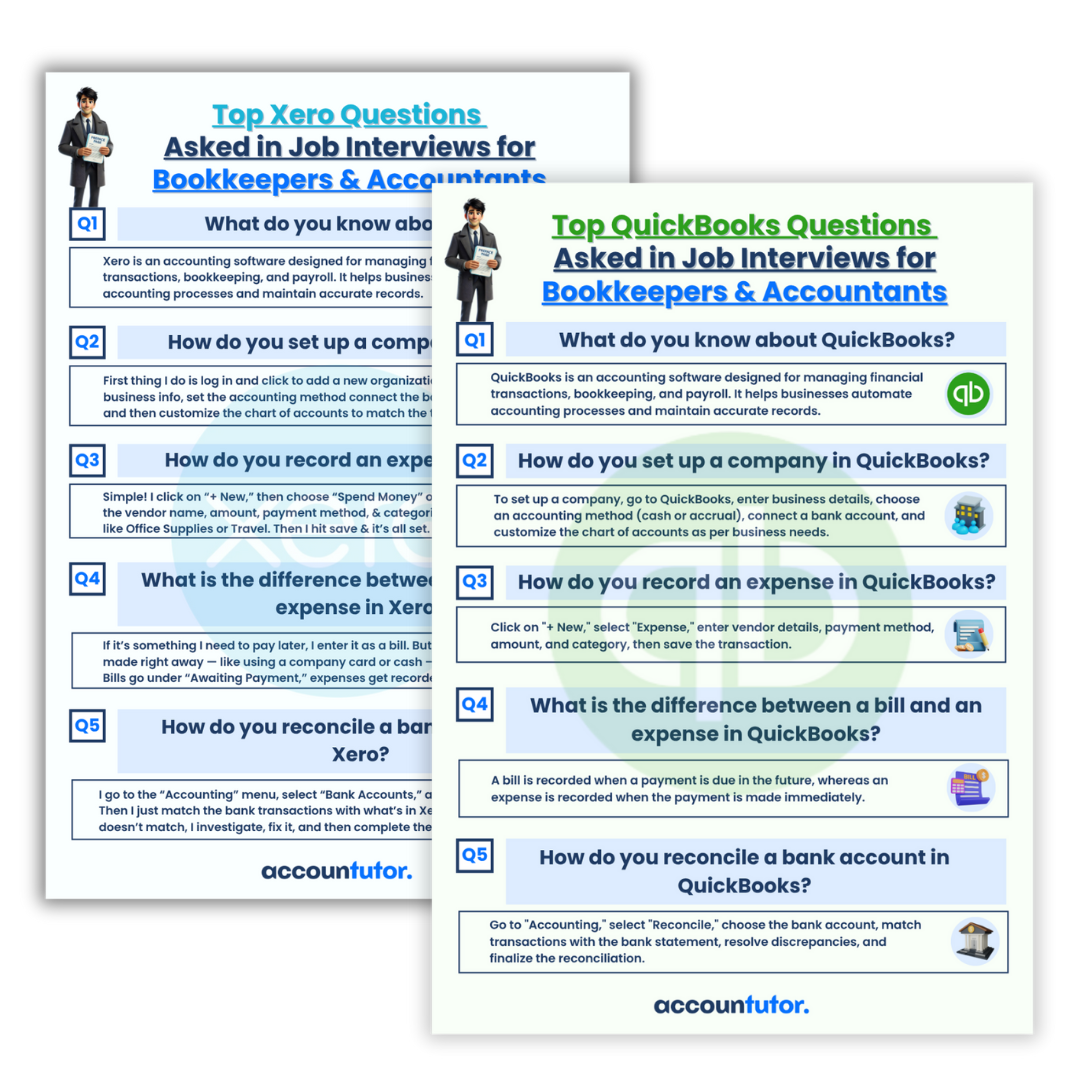
Additionally, you can access valuable resources like interview questions for QuickBooks & Xero Accounting roles. These PDFs cover real-world tasks, helping you understand employer expectations and confidently discuss your skills.

Frequently Asked Questions About AI in Bookkeeping
Q1: Will generative AI replace bookkeepers?
No, generative AI, like ChatGPT, acts as an assistant, not a replacement. It handles repetitive tasks, allowing bookkeepers to focus on more complex analysis, client relationships, and strategic decision-making. Your expertise remains crucial.
Q2: Is generative AI safe for handling sensitive financial data?
When using AI tools, always prioritize data privacy and security. Avoid inputting highly sensitive client information directly into public AI models. Instead, use it for generating templates, summarizing anonymized data, or processing general queries. Always adhere to your firm’s data protection policies.
Q3: What’s the best way to learn how to use ChatGPT for bookkeeping?
Look for courses specifically designed for accountants and bookkeepers, like those offering prompt toolkits and real-world examples. Hands-on practice with guided lessons helps you learn how to ask the right questions to get accurate and relevant results.
Q4: Can AI help with advanced accounting tasks beyond simple entries?
Yes, AI can assist with various advanced tasks, including preliminary data analysis, identifying trends in financial reports, risk assessment support, and even generating drafts for complex financial statements. For tasks like bank reconciliation, a specific checklist ensures thoroughness and accuracy when leveraging AI.

Keywords: generative AI, ChatGPT bookkeeping, bank reconciliation checklist, accounting automation, financial tasks AI, QuickBooks AI, Xero AI, bookkeeping efficiency, AI for accountants, financial technology