As a bookkeeper or accountant, you know the daily grind: endless journal entries, explaining complex reports, drafting emails, and following up with clients. It often feels like a constant race against the clock. But what if a powerful tool could help you streamline these tasks, making your work faster and more efficient? Enter ChatGPT, your new AI assistant.
This isn’t about replacing your valuable expertise; it’s about empowering you. Think of ChatGPT as a dedicated, round-the-clock personal assistant, ready to provide instant support and accurate insights whenever you need them.
What is ChatGPT, and Why Should Bookkeepers Care?
ChatGPT is an advanced AI tool designed to comprehend human language and generate helpful, contextually relevant responses. For bookkeepers and accountants, this translates into practical assistance with core tasks. Imagine it handling journal entries, composing professional emails, summarizing lengthy reports, or even drafting answers to common client queries.

Instead of manually processing every detail, you can leverage ChatGPT to save significant time and reduce workload. It’s like having a knowledgeable teammate who understands accounting principles and is always available to lend a hand.
A Checklist for AI Assistant for Monthly Close Process
An effective AI assistant can significantly enhance your monthly close process. Here’s a practical checklist for AI assistant for monthly close process components that ChatGPT expertly handles, making your workflow smoother and more accurate.
1. Streamlined Journal Entries
Manually creating journal entries often involves careful thought to determine the correct debits and credits. With ChatGPT, this process becomes incredibly simple and fast. You can type a prompt like, “Create a journal entry for rent paid $1,200 on May 1st from the bank,” and receive the accurate entry within seconds.
Whether you’re dealing with rent, sales, payroll, or other transactions, ChatGPT helps you complete entries much faster, eliminating guesswork and boosting confidence. It ensures consistency and accuracy in your financial records. 
2. Simplified Financial Reporting for Clients
Many clients find financial reports overwhelming and struggle to grasp the finer details. They typically want clear, concise summaries of their financial health, not elaborate breakdowns. Instead of spending valuable time simplifying these reports yourself, you can use ChatGPT.
Simply paste a report into the AI and ask it to highlight the main points. ChatGPT will generate an easy-to-understand summary you can share with clients. This not only streamlines your work but also enhances client understanding and trust.
3. Effortless Email Communication
Crafting professional emails, especially reminders or follow-ups, can be a time-consuming task. ChatGPT can generate these communications in moments. Just provide a brief instruction, such as, “Write a reminder email for missing receipts,” and it will compose a polished message for you.
From thank-you notes to deadline reminders or follow-up communications, ChatGPT ensures you always have the right words at your fingertips. It helps you maintain professional communication without the usual hassle.
4. Rapid Client Q&A
Clients frequently ask similar questions, like “Why is my profit different from my bank balance?” or “Do I really need to keep every receipt?” Instead of drafting new replies for each query, you can leverage ChatGPT to formulate concise and clear responses.
You can even save these AI-generated answers as templates for future use, further boosting your efficiency. This approach saves you considerable time and allows you to respond to client inquiries promptly and professionally.
5. Seamless Integration with Accounting Software
For bookkeepers using popular platforms like QuickBooks Online or Xero, ChatGPT acts as an excellent supplementary tool. It can assist you in interpreting reports, clarifying specific transactions, or even summarizing overall activity within your chosen software.
You don’t need to be a tech guru; simply ask your questions, and ChatGPT will provide clear guidance. This integration helps you get more out of your existing accounting tools.
Become an AI-Powered Bookkeeping Professional
Today’s most sought-after bookkeepers are those who embrace smart tools like ChatGPT. They complete tasks more quickly, provide better client service, and free up time for new opportunities. If you’re looking to advance your career, integrating AI is a smart move.
You’ll reduce stress, enhance efficiency, and deliver superior service to your clients. 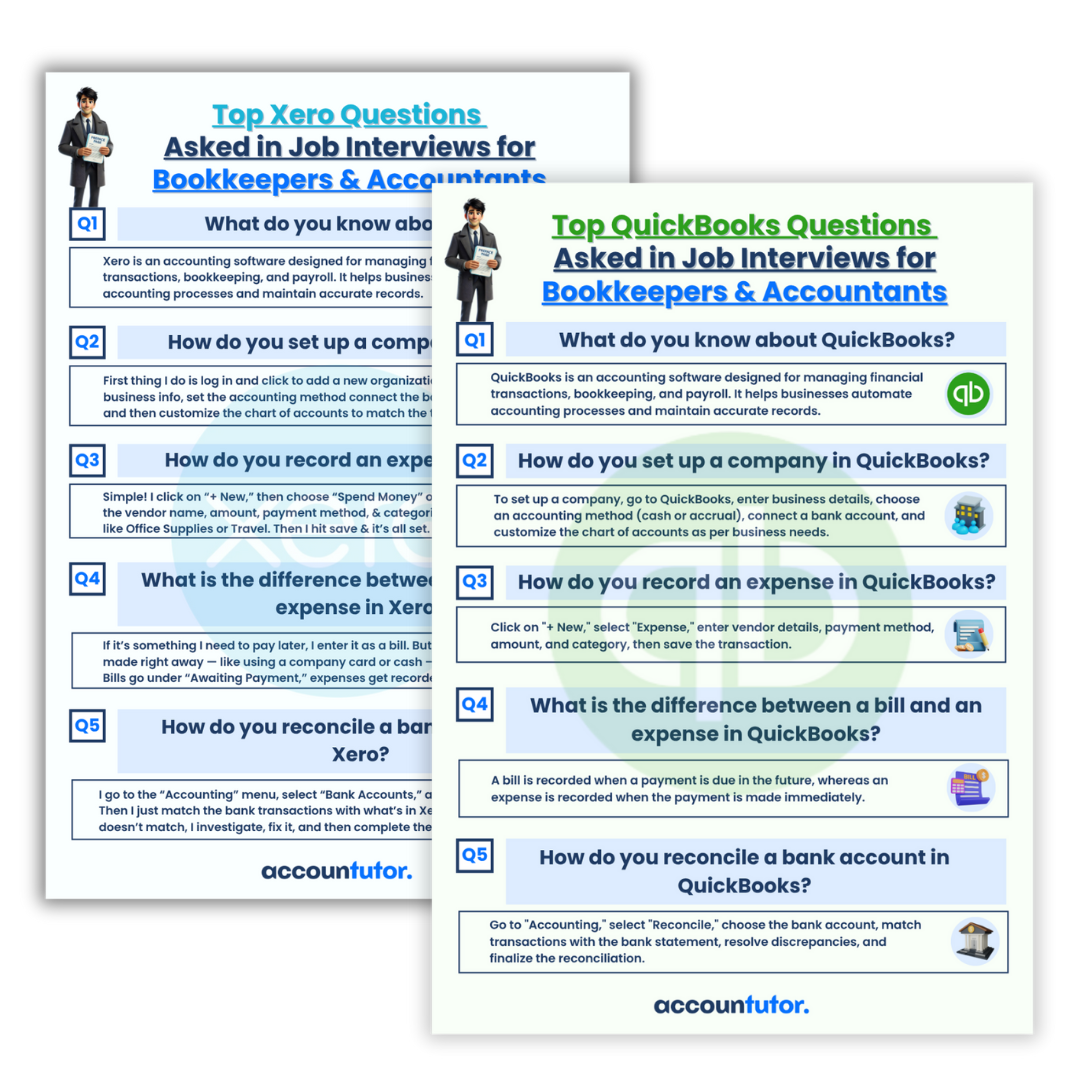
Mastering ChatGPT with Accountutor
To truly unlock ChatGPT’s potential, learn how to craft effective prompts that yield accurate results. Accountutor offers a comprehensive course, “ChatGPT for Bookkeepers & Accountants,” designed to teach you step-by-step how to utilize AI for journal entries, emails, reports, and more.
The course provides ready-to-use prompts, real-world examples, and beginner-friendly video tutorials. By integrating ChatGPT with tools like QuickBooks and Xero, you can save hours each week and enhance your professional confidence. You can also explore other practical courses on QuickBooks Online, Xero Accounting, and Bookkeeping Basics.
Accountutor also offers resources like PDF guides for QuickBooks & Xero Accounting job interview questions. These practical questions cover real-world tasks, helping you prepare confidently for employer expectations. 
Frequently Asked Questions (FAQ)
Q: Can ChatGPT replace a bookkeeper?
A: No, ChatGPT is an assistant tool, not a replacement. It automates repetitive tasks and helps bookkeepers work more efficiently, allowing them to focus on higher-level analysis and client relationships.
Q: How accurate are ChatGPT’s responses for accounting tasks?
A: ChatGPT is highly accurate when provided with clear and specific prompts. However, always review its output for critical accounting tasks to ensure compliance and correctness, as AI can sometimes misinterpret nuanced financial contexts.
Q: Is ChatGPT compatible with all accounting software?
A: While ChatGPT doesn’t directly integrate with all software, it can process and interpret data from popular platforms like QuickBooks and Xero. You can use it to summarize reports or explain transactions generated by these systems.
Q: What kind of prompts should I use for journal entries?
A: Be specific! Include the transaction type, amount, date, and accounts involved. For example, “Create a journal entry for office supplies purchased for $500 cash on October 10th.”
Q: How can I learn to use ChatGPT effectively for bookkeeping?
A: Platforms like Accountutor offer specialized courses, such as “ChatGPT for Bookkeepers & Accountants,” which provide structured learning, practical examples, and ready-to-use prompts to help you master the tool.
Embrace the Future of Bookkeeping
The landscape of bookkeeping is evolving, and AI tools like ChatGPT are at the forefront of this transformation. By integrating an AI assistant into your workflow, you not only make your daily tasks easier but also position yourself as a forward-thinking professional. Start your journey today and become the bookkeeper ready for tomorrow’s challenges and opportunities.
Keywords: ChatGPT bookkeeping, AI for accountants, monthly close process, financial automation, journal entry automation, client communication AI, QuickBooks AI, Xero AI, bookkeeping efficiency, AI assistant checklist