In the fast-paced world of finance, bookkeepers and accountants often find themselves juggling numerous tasks. From meticulous journal entries and comprehensive report explanations to client communications and follow-ups, the demands can feel endless. What if a powerful tool could help you navigate these responsibilities more efficiently, freeing up valuable time and reducing stress? This is where AI chatbots like ChatGPT step in, transforming the way financial professionals operate.
Think of an AI chatbot not as a replacement, but as your dedicated 24/7 personal assistant. It provides instant support and quick answers whenever you need them, streamlining many of your daily financial operations.

AI chatbots are intelligent tools designed to understand your queries and deliver helpful, relevant responses. For bookkeepers and accountants, this means practical assistance with a wide range of tasks. You can leverage these platforms to simplify journal entries, draft professional emails, summarize complex financial reports, and even answer common client questions. Instead of manual processing, an AI chatbot empowers you to save time and work more intuitively, much like having a knowledgeable teammate constantly by your side.
Streamlining Journal Entries with AI
Creating accurate journal entries used to require careful thought to identify the correct debits and credits. Now, with an AI chatbot, you can simply input a request like, ‘Create a journal entry for $1,200 rent paid from the bank on May 1st.’ The AI instantly generates the correct entry, whether for rent, sales, payroll, or other transactions. This capability helps you complete entries faster and with greater confidence, eliminating second-guessing.
Simplifying Client Communication and Reporting
Many clients find financial reports overwhelming and often just want a clear overview of their financial health. Instead of spending extensive time explaining every detail, you can paste a report into an AI chatbot and ask it to summarize the key points. It quickly provides a concise, easy-to-understand summary you can share, enhancing client comprehension and satisfaction.
Crafting professional emails also consumes valuable time, especially for reminders or follow-ups. An AI chatbot can draft these communications in seconds. Just prompt it with something like, ‘Write a reminder email for missing receipts,’ and it will generate a professional message for you. From thank-you notes to deadline reminders, you’ll always have the right words ready, effortlessly.
Answering Client Questions Instantly
Clients frequently ask similar questions, such as ‘Why is my profit different from my bank balance?’ or ‘Do I need to keep every receipt?’ Instead of formulating new answers repeatedly, you can use an AI chatbot to generate short, clear responses. You can even save these as templates for future use, allowing you to respond promptly and professionally, saving significant time.
Enhancing Accounting Software Interaction
If you utilize popular accounting platforms like QuickBooks Online or Xero, an AI chatbot can become an invaluable assistant. It helps you interpret reports, clarify transactions, or summarize activities within your software. You don’t need to be a tech guru; simply ask your question, and the AI chatbot provides guidance, making these powerful tools even more accessible.
Best Practices for AI Chatbots in Budgeting and Financial Management
While AI chatbots revolutionize bookkeeping, the best practices for AI chatbot for budgeting follow a similar approach. To effectively leverage these tools for budgeting, you must provide clear, specific prompts about your income, expenses, and financial objectives. Just as with bookkeeping tasks, accuracy, data security, and understanding the AI’s limitations remain paramount.
Always verify the information an AI provides, especially when dealing with sensitive financial data. Use the AI as a powerful assistant to analyze trends, forecast expenditures, and even suggest cost-saving strategies for your budget. The key lies in precise prompting and critical evaluation of the generated insights.
Becoming a Future-Ready Financial Professional
Today, financial professionals who embrace smart tools like AI chatbots distinguish themselves. They complete tasks more quickly, serve clients more effectively, and gain more time to pursue new opportunities. Adopting AI technology is a strategic move for career growth, leading to increased efficiency, reduced stress, and superior service delivery.
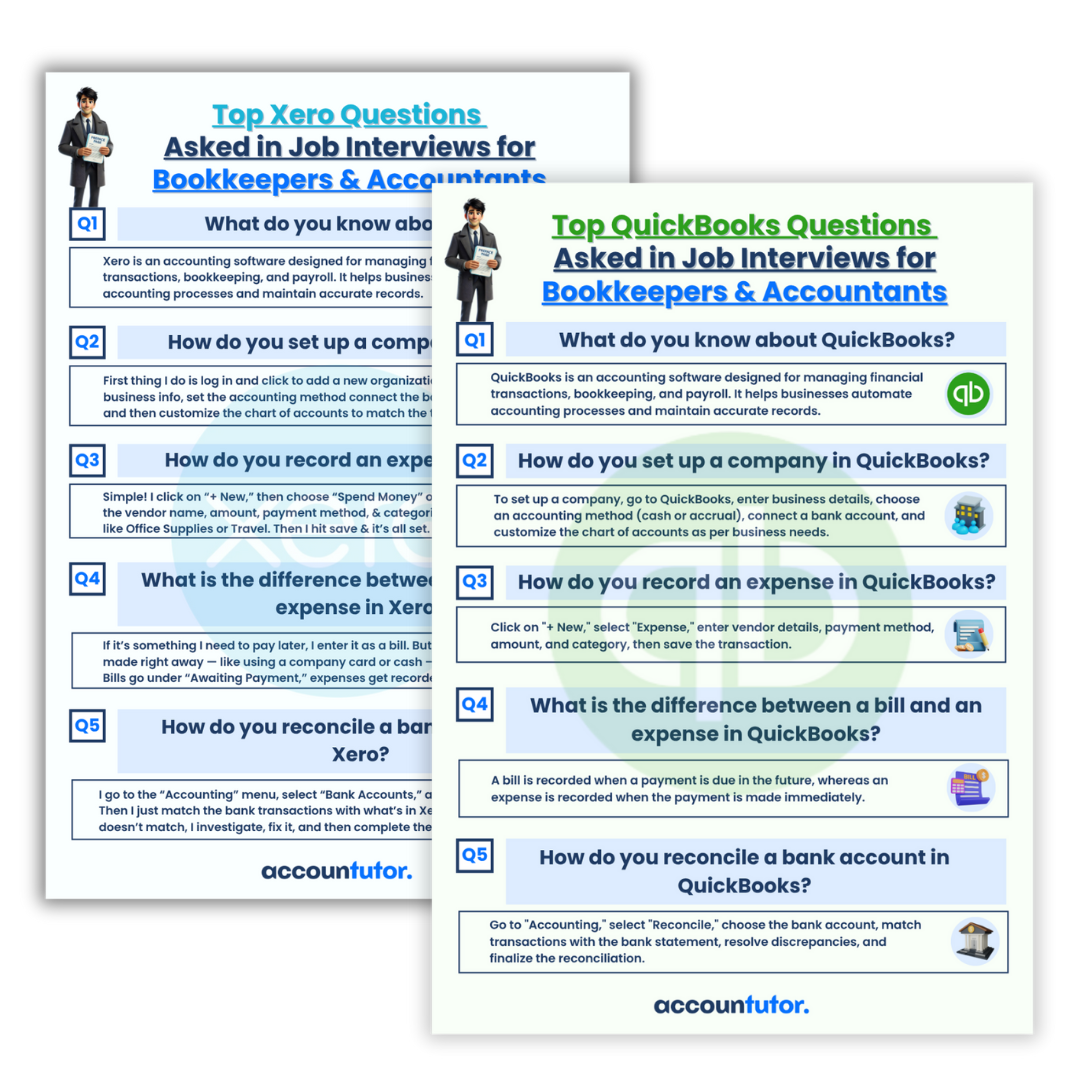
Tools and training, such as those offered by platforms like Accountutor.com, can empower you to master AI chatbots for financial tasks. Learning to craft effective prompts and understanding how to integrate AI with software like QuickBooks and Xero can save you hours each week. This expertise not only builds your confidence but also positions you as a leading professional in the evolving financial landscape.

Accountutor.com provides comprehensive courses and resources, including practical interview questions for QuickBooks and Xero, to help you understand employer expectations and confidently discuss your skills. By embracing these advancements, you become the bookkeeper or accountant everyone wants to hire – ready for the future of finance.
Frequently Asked Questions About AI Chatbots in Finance
Q1: Can an AI chatbot replace a human bookkeeper or accountant?
No, an AI chatbot serves as a powerful assistant rather than a replacement. It automates repetitive tasks, provides quick insights, and helps streamline workflows, allowing human professionals to focus on more complex analysis, strategic planning, and client relationships.
Q2: How accurate are AI-generated financial entries or summaries?
AI chatbots can generate highly accurate information based on the prompts they receive. However, it’s crucial for financial professionals to always review and verify any AI-generated content, especially for journal entries or client reports, to ensure compliance and precision.
Q3: Is my financial data safe when using an AI chatbot?
Data security is a critical concern. When using any AI tool for financial tasks, ensure you understand the platform’s data privacy policies. Avoid sharing highly sensitive or confidential client information unless the AI tool is specifically designed and secured for such purposes, potentially through enterprise-grade solutions.
Q4: What types of financial tasks are best suited for AI chatbots?
AI chatbots excel at tasks requiring information retrieval, summarization, content generation (like emails or basic reports), and rule-based processing. This includes drafting journal entries, explaining financial terms, summarizing reports, generating client communications, and answering frequently asked questions.
Keywords: AI in finance, AI for bookkeeping, AI chatbot for budgeting, financial automation, ChatGPT for accountants, accounting software integration, financial efficiency, future of finance, AI best practices, financial tech tools