Revolutionizing Bookkeeping: How AI Tools Like ChatGPT Transform Financial Tasks
Artificial intelligence is rapidly changing how we approach various industries, and bookkeeping is no exception. Tools like ChatGPT are emerging as powerful allies for finance professionals, streamlining processes and offering new levels of efficiency.
You might wonder how an AI model can tackle complex financial tasks. The truth is, AI offers significant support, from automating routine data entry to providing valuable financial insights, freeing up bookkeepers to focus on more strategic work.
Streamlining Data Entry and Categorization
Manual data entry is often a tedious and error-prone aspect of bookkeeping. ChatGPT can significantly reduce this burden by processing large volumes of transactional data.
You can use it to quickly extract key information from invoices, receipts, and bank statements, then categorize expenses and income accurately. This saves countless hours and minimizes the risk of human error.
Enhancing Reconciliation and Error Detection
Reconciling accounts can be a painstaking process, especially when dealing with numerous transactions. AI tools excel at pattern recognition, making them ideal for identifying discrepancies.
By comparing bank statements with internal records, ChatGPT can flag potential mismatches or missing transactions. This allows bookkeepers to quickly investigate and resolve issues, ensuring accurate financial records.
Powering Financial Reporting and Insights
Generating comprehensive financial reports is crucial for businesses, but it often requires significant analytical effort. An AI financial analysis tool like ChatGPT can assist by summarizing complex data into understandable reports.
It can analyze trends, identify key performance indicators, and even offer predictive insights based on historical data. This empowers businesses to make more informed decisions about their financial future.
Assisting with Tax Preparation
Tax preparation involves meticulous organization and a thorough understanding of ever-changing regulations. ChatGPT can help bookkeepers organize financial documents and identify deductible expenses.
While it cannot provide legal tax advice, it can serve as a valuable resource for understanding common tax laws and ensuring all relevant financial data is readily available for tax filing.
Boosting Learning and Professional Development
Staying updated with accounting software and industry best practices is vital for bookkeepers. AI models can act as a personal tutor or research assistant, explaining complex accounting principles or software functionalities.
For instance, if you’re preparing for an interview or looking to deepen your knowledge of a specific platform, AI can generate practice questions or provide explanations.

Many bookkeepers find value in using AI to test their knowledge or explore specific scenarios within accounting software like QuickBooks Online.
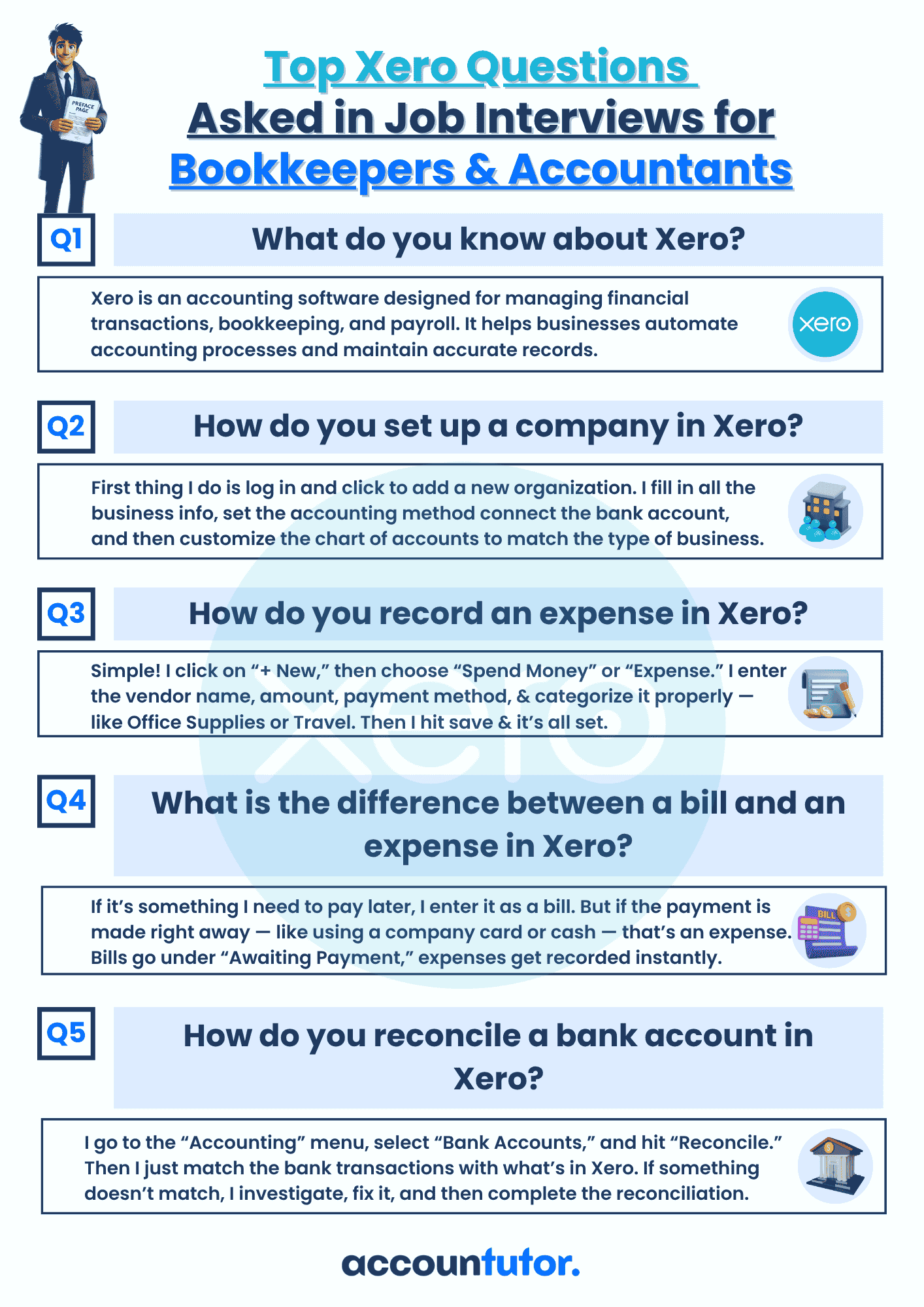
Similarly, when working with Xero Accounting, AI can help you prepare for challenges or understand advanced features, turning complex problems into learning opportunities.
Forecasting and Budgeting Support
Effective financial planning requires accurate forecasting and robust budgeting. ChatGPT can help analyze past financial performance to project future trends, aiding in the creation of more realistic budgets.
By simulating various financial scenarios, it provides insights into potential outcomes, helping businesses anticipate challenges and opportunities.
The Benefits of Integrating AI in Bookkeeping
- Increased Efficiency: Automates repetitive tasks, saving time and resources.
- Improved Accuracy: Reduces human error in data processing and reconciliation.
- Enhanced Insights: Provides deeper financial analysis for better decision-making.
- Cost Savings: Optimizes workflows and potentially reduces the need for extensive manual labor.
- Strategic Focus: Allows bookkeepers to concentrate on higher-value activities.
Important Considerations
While AI offers incredible advantages, remember that human oversight remains crucial. Always verify the information and analyses provided by AI tools, especially for critical financial decisions.
Data privacy and security are also paramount. Ensure you use AI tools that adhere to strict data protection standards and never input sensitive information into unsecured platforms.
Conclusion
AI tools like ChatGPT are not here to replace bookkeepers but to empower them. By automating mundane tasks and offering advanced analytical capabilities, these tools allow finance professionals to be more efficient, accurate, and strategic. Embracing this technology can lead to a significant transformation in how businesses manage their finances.
Frequently Asked Questions (FAQ)
Q: Can ChatGPT replace a human bookkeeper?
A: No, ChatGPT cannot fully replace a human bookkeeper. It is a powerful assistant that automates tasks and provides insights, but human oversight, critical thinking, and ethical judgment remain essential for complex financial decisions and compliance.
Q: Is it safe to input sensitive financial data into ChatGPT?
A: You should exercise extreme caution with sensitive financial data. Always use AI tools that explicitly state their data privacy and security protocols. For highly confidential information, it’s generally safer to use AI on anonymized data or integrate it with secure, enterprise-level financial software.
Q: How accurate is AI for financial analysis?
A: AI can be highly accurate for financial analysis when provided with good data and properly trained. However, its accuracy depends on the quality of the input and the sophistication of the model. Always cross-reference AI-generated insights with human expertise and other reliable sources.
Q: What kind of bookkeeping tasks can AI automate?
A: AI can automate tasks like data entry from receipts and invoices, categorization of transactions, initial reconciliation checks, basic report generation, and identifying financial trends. It handles repetitive, rule-based processes very well.
Q: How can bookkeepers start using AI tools?
A: Bookkeepers can start by exploring AI features integrated into existing accounting software or experimenting with general AI tools like ChatGPT for tasks like summarizing financial reports, explaining accounting concepts, or drafting communications. Begin with less critical tasks to build familiarity and trust.
Keywords: AI bookkeeping, ChatGPT for finance, financial analysis tool, accounting automation, AI in accounting, bookkeeping efficiency, financial technology, AI for small business, expense categorization, financial reporting