The accounting profession is undergoing a significant transformation, driven by rapid advancements in technology. While some professionals might initially fear that artificial intelligence (AI) will replace human expertise, tools like ChatGPT are emerging as powerful allies.
When used thoughtfully and responsibly, AI can revolutionize financial management. It streamlines processes, boosts accuracy, and offers real-time insights, pushing the accounting industry into an exciting future.

What Exactly is ChatGPT?
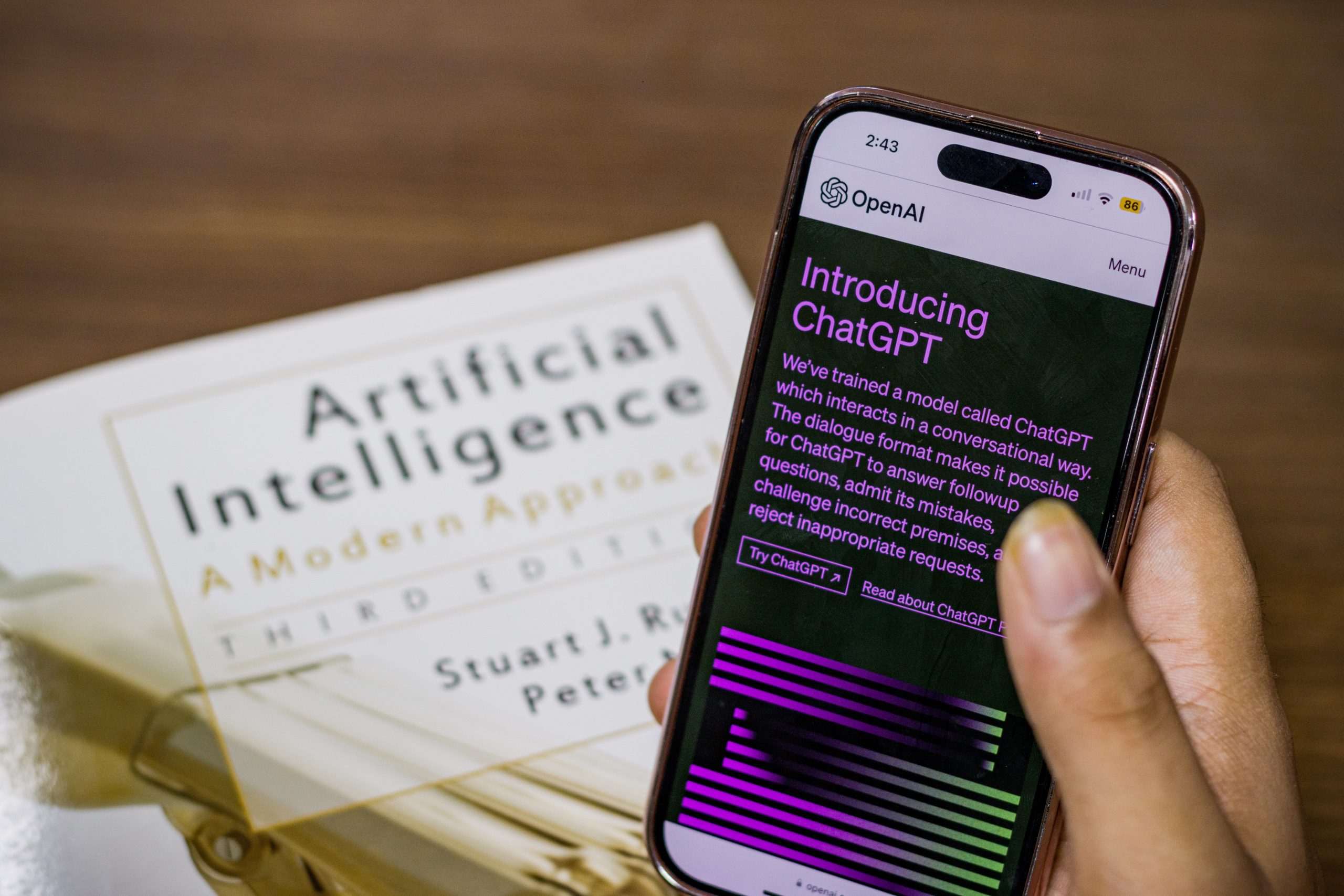
ChatGPT is an advanced AI program designed for natural, human-like conversations. Developed by OpenAI, this sophisticated chatbot learns from an immense volume of internet text data, giving it knowledge across countless subjects.
When you interact with ChatGPT, asking questions or providing information, it uses special techniques to understand your intent. Then, its powerful computing capabilities generate clear, relevant responses that fit seamlessly into the conversation.
What makes ChatGPT remarkable is its ability to craft answers that closely mirror human language, making interactions feel authentic. With the right prompt, it can even adopt a specific tone or style, making it a versatile virtual assistant.
However, it’s crucial to remember that ChatGPT operates purely on algorithms and learned data, lacking genuine consciousness or emotions. Despite this, its proficiency in understanding and generating text opens up exciting possibilities across various sectors, including financial management.
ChatGPT’s Transformative Role in Accounting

ChatGPT offers immense potential to revolutionize accounting practices. Its advanced language processing capabilities can streamline and automate numerous financial tasks, saving valuable time and enhancing overall efficiency.
Accountants can boost productivity, gain deeper financial insights, and make more informed business decisions with AI assistance. Here’s how ChatGPT can support various accounting functions:
Bookkeeping and Data Entry
ChatGPT simplifies bookkeeping by intelligently categorizing transactions and recording journal entries. It can automate data entry by extracting essential information from invoices, receipts, and other financial documents, significantly reducing manual effort and potential errors.
Audit and Compliance Support
Auditors can leverage ChatGPT to identify potential errors or irregularities within financial statements. It automates compliance checks, flags suspicious transactions, and supports fraud detection efforts, making audit processes more efficient and effective.
Decision-Making and Forecasting
This AI tool provides real-time financial information crucial for data-driven decisions. It performs scenario analysis and financial forecasting, aiding in budgeting, cash flow management, and strategic business planning.
Data Analysis and Insights
ChatGPT excels at analyzing large volumes of financial data, identifying hidden trends, correlations, and emerging opportunities. By extracting meaningful insights, it empowers accountants to make data-driven decisions and pinpoint areas for operational improvement.
Customer Support and Financial Queries
Generative AI can greatly enhance customer support by addressing fundamental financial inquiries and offering quick assistance. Learning how to use generative AI for client communication effectively means deploying it to help users navigate systems, understand policies, and retrieve relevant information swiftly. This frees up human staff to focus on more complex, personalized client interactions.
Process Automation and Efficiency
By automating repetitive and time-consuming tasks, ChatGPT allows accountants to dedicate more attention to complex, high-value activities. This significantly reduces manual effort, improves overall efficiency, and minimizes the risk of human error in financial operations.
While ChatGPT provides powerful assistance, it should not replace the expertise and professional judgment of human accountants. Human oversight and verification remain essential to ensure accuracy, compliance, and ethical considerations in all aspects of financial management.
Want to learn how to incorporate AI into your business? Rainar from Katana Cloud Inventory discusses how AI impacts businesses and how it can be implemented to improve manufacturing operations. Check out the episode:

Key Benefits of Integrating ChatGPT into Accounting

Integrating ChatGPT into accounting workflows offers numerous advantages that can significantly improve financial management processes. Here are some key benefits:
1. Enhanced Efficiency and Time Savings
ChatGPT automates repetitive accounting tasks like data entry and transaction categorization. This allows accounting professionals to allocate their time to more strategic activities, boosting overall efficiency and saving valuable hours.
2. Improved Accuracy
Utilizing its computational power, ChatGPT helps minimize human errors in calculations, data entry, and financial analysis. Its capacity to process extensive data volumes enhances accuracy and reduces the likelihood of costly mistakes.
3. Advanced Data Analysis Capabilities
ChatGPT can rapidly analyze vast amounts of financial data, uncovering patterns, trends, and anomalies. This capability provides accountants with invaluable insights, enabling them to make more informed, data-driven decisions for superior financial management.
4. Quick and Relevant Information Access
ChatGPT delivers prompt responses to financial queries, providing real-time information on demand. Accountants can quickly access critical data, financial reports, and insights, facilitating faster problem-solving and decision-making.
5. Superior Decision-Making Support
With its ability to generate meaningful insights and forecasts, ChatGPT actively supports better business decisions. It assists accountants in predicting various scenarios, analyzing financial risks, and formulating effective strategies.
6. Robust Audit and Compliance Assistance
ChatGPT aids auditing processes by identifying potential errors or irregularities in financial statements. It automates compliance checks, ensuring adherence to regulations and improving the overall efficiency of audit procedures.
7. Continuous Learning and Adaptability
ChatGPT can be trained with specific data and customized to meet an organization’s unique requirements. It learns from past interactions, continually refining its responses and aligning more closely with particular accounting practices over time.
Challenges of Using ChatGPT in Accounting

While the benefits of using ChatGPT in accounting are clear, several challenges must be considered. Addressing these issues is crucial for successful implementation.
1. Trustworthiness and Reliability
ChatGPT’s responses are based on patterns within its training data, which can sometimes lead to inaccuracies or unreliable outputs, particularly with complex or ambiguous queries. Rigorous verification and human oversight are always necessary to confirm the accuracy of generated information.
Blind reliance on AI without proper proofreading can have significant consequences. For instance, two lawyers faced a $5,000 fine when they submitted legal citations generated by ChatGPT that were later found to be fabricated.
2. Limited Contextual Understanding
ChatGPT might struggle to fully grasp the subtle context or true intent behind a question, potentially leading to incomplete or incorrect responses. It may interpret queries too literally or miss nuances, which can impact the reliability of the results.
3. Data Privacy and Security Concerns
Using ChatGPT for accounting means sharing sensitive financial data with an AI system. Implementing stringent privacy protocols and robust security measures is paramount to protect confidential information from unauthorized access or potential data breaches.
4. Ongoing Training and Maintenance
ChatGPT requires continuous training and updates to remain relevant and aligned with evolving accounting practices, regulations, and industry standards. Maintaining an up-to-date dataset and implementing regular updates can be resource-intensive.
5. Ethical Considerations and Bias
Since ChatGPT generates responses based on its training data, there is a risk of perpetuating biases present in that data. Proactively addressing and mitigating these biases is essential to ensure fair and impartial outcomes in accounting processes.
6. Difficulty with Complex Scenarios
ChatGPT may face limitations when handling highly intricate or specialized accounting scenarios that demand deep domain expertise. Its responses might lack the nuanced experience required for complex financial analysis or the interpretation of specific regulations.
7. Dependency on Network and Infrastructure
As an online service, ChatGPT relies on a stable internet connection and robust infrastructure. Any disruptions in connectivity or technical issues can hinder its availability and negatively impact workflow efficiency.
To overcome these challenges, it’s vital to balance ChatGPT’s capabilities with human expertise and oversight. Combining the strengths of AI with the critical thinking and judgment of human professionals maximizes benefits while mitigating risks.
How ChatGPT Will Reshape the Accounting Industry

ChatGPT is poised to significantly impact the accounting industry, introducing changes that will redefine traditional practices. Here’s how generative AI is expected to influence the accounting landscape:
1. Automation of Repetitive Tasks
ChatGPT will automate routine and repetitive accounting tasks, including data entry, categorization, and report generation. This reduces manual effort, enhances productivity, and enables accountants to focus on more strategic and analytical responsibilities.
2. Enhanced Accuracy and Reduced Errors
The AI’s capabilities minimize human errors in data entry, calculations, and financial analysis. By processing large volumes of data with precision, it improves the accuracy of financial reporting, leading to more reliable financial information.
3. Advanced Data Analysis and Deeper Insights
ChatGPT’s ability to analyze vast amounts of financial data provides accountants with profound insights. It helps identify critical patterns, trends, and anomalies, empowering professionals to make data-driven decisions and optimize financial performance.
4. Stronger Compliance and Audit Support
ChatGPT assists in ensuring compliance with accounting regulations and standards. By automating compliance checks and supporting audit processes, it enhances the effectiveness and efficiency of regulatory adherence, reducing the risk of errors and legal complications.
Beyond General AI: Introducing Katana AI (KAI)

While ChatGPT offers businesses a general AI assistant for various accounting and administrative tasks, specialized solutions provide tailored benefits. Katana’s AI (KAI) is designed specifically for manufacturing and integrates directly with Katana’s system.
KAI eliminates manual data entry and fragmented information, offering a suite of powerful features. Here’s how KAI streamlines operations:
1. Sales Order Assistant
Say goodbye to manual entry with KAI’s sales order assistant. When customers send purchase requests via email, KAI reads and translates unstructured data to create sales orders directly within Katana. This feature saves time, minimizes data entry errors, and seamlessly generates quotes, allowing your sales team to focus on closing deals.
2. Sales Widget for Real-time Overview
Need an instant business snapshot? The sales widget provides a real-time overview of your sales operations and key business metrics in one convenient place. Leveraging KAI’s pre-aggregated data, the widget offers strategic and operational insights at a glance, giving you the pulse of your business without navigating multiple dashboards.
3. Dynamic Sales Insights
Unlock powerful insights using intuitive prompts. By asking KAI for visualizations—such as “Show me revenue trends”—you receive instant, graphical representations tailored to your query. Whether you’re examining monthly revenue trends or filtering by specific data points, KAI delivers the data you need for informed, strategic decisions, making your data actionable for manufacturing and sales needs.
With Katana, you don’t need extra tools or generalized AI assistants. You’re equipped to streamline, automate, and grow, all within a single integrated platform. To learn more about KAI and how Katana can optimize your inventory management, request a demo today!
Frequently Asked Questions About ChatGPT in Accounting
1. Can ChatGPT completely replace human accountants?
No, ChatGPT cannot fully replace human accountants. While it excels at automating repetitive tasks, processing data, and providing insights, it lacks the critical thinking, ethical judgment, and nuanced contextual understanding that professional accountants offer. Human oversight remains essential for accuracy, compliance, and strategic decision-making.
2. What are the primary benefits of using ChatGPT in accounting?
The main benefits include enhanced efficiency through task automation, improved accuracy by reducing human error, advanced data analysis for deeper financial insights, quicker access to relevant information, better support for decision-making, and assistance with audit and compliance procedures.
3. What are the key risks or challenges of using AI like ChatGPT for financial tasks?
Key challenges include potential inaccuracies or unreliable outputs, limited contextual understanding, data privacy and security concerns, the need for continuous training and maintenance, ethical considerations regarding bias, difficulties with highly complex scenarios, and dependency on stable network infrastructure.
4. How does ChatGPT handle data privacy in accounting?
Using ChatGPT for accounting requires careful consideration of data privacy. Organizations must implement strict security measures and privacy protocols to protect sensitive financial information. It is crucial to understand how the AI provider handles data and ensure compliance with relevant regulations like GDPR or HIPAA.
5. Is a specialized AI solution better than a general AI like ChatGPT for accounting?
For general tasks, ChatGPT can be highly effective. However, for industry-specific needs, a specialized AI solution like Katana AI (KAI) often proves superior. Specialized AI is tailor-made for particular domains (e.g., manufacturing accounting), offering deeper integrations, more relevant features, and a better understanding of niche requirements than a generalized tool.
Keywords: ChatGPT, AI in accounting, generative AI, financial management, accounting automation, data analysis, client communication, bookkeeping, audit support, Katana AI