How Generative AI Transforms Bookkeeping and Financial Reporting
Financial professionals often find themselves caught in a whirlwind of tasks, from meticulously recording journal entries to crafting clear client reports. This constant demand can lead to overwhelming schedules and limited time for strategic work. Imagine having an intelligent assistant that helps you streamline these daily bookkeeping and accounting duties.
This is precisely where generative AI, like ChatGPT, steps in. It’s not about replacing your expertise; it’s about empowering you to work more efficiently and effectively. Think of it as your dedicated, always-on personal assistant.
Understanding Generative AI’s Role in Finance
ChatGPT is an advanced artificial intelligence tool designed to understand and generate human-like text. For bookkeepers and accountants, this translates into a powerful ally ready to assist with practical, real-world tasks. You can harness its capabilities to create accurate journal entries, summarize complex financial reports, draft professional emails, and even provide quick answers to common client questions.
It functions as a smart team member, always available to lend a hand and significantly boost your productivity. This intelligent support allows you to dedicate more time to critical analysis and client relationships.
Streamlining Core Bookkeeping Tasks with AI
1. Simplify Journal Entries Instantly
Creating precise journal entries traditionally requires careful thought about debits and credits. Generative AI dramatically simplifies this process. You can simply input a prompt, such as, “Generate a journal entry for $1,200 in rent paid on May 1st from the bank account.” The AI quickly provides the correct entry in seconds, eliminating guesswork and accelerating your workflow for various transactions, including sales, payroll, and expenses.

2. Make Financial Reports Client-Friendly
Many clients find detailed financial reports confusing and overwhelming. Instead of spending valuable time explaining every nuance, you can provide the report to ChatGPT and request a concise summary of the main points. This generates an easy-to-understand overview that you can share, ensuring clients grasp their financial standing without getting bogged down in intricate details.
This approach not only fosters client confidence but also frees up your precious time for other important tasks.
3. Effortless Professional Email Composition
Drafting professional emails, especially follow-ups or reminders, can consume a considerable portion of your day. With generative AI, you simply provide a brief instruction, like “Write a reminder email for missing expense receipts.” It then composes a well-structured message for you in moments.
Whether it’s a thank-you note, a deadline reminder, or a general inquiry, you’ll always have polished communication ready to send.
4. Rapid Responses to Client Questions
Clients frequently ask similar questions, such as “Why does my profit differ from my bank balance?” or “Do I really need to keep every receipt?” Instead of crafting new responses each time, leverage AI to generate clear and succinct answers. You can even save these as templates for quick, professional replies, saving considerable time and ensuring consistency in your communication.
5. Seamless Integration with Accounting Software
Generative AI tools seamlessly complement popular accounting platforms like QuickBooks Online and Xero. You can use AI to gain deeper insights into your reports, clarify specific transactions, or generate summaries of your financial data directly within these systems. You don’t need to be a tech expert; simply ask your question, and the AI will provide helpful guidance.
Your Essential Checklist for Generative AI for Financial Reporting
When you decide to adopt generative AI for your financial reporting, consider a practical checklist to ensure successful and secure implementation. First, verify that robust data privacy and security protocols are in place for any AI tools you use. Second, always prioritize accuracy; fact-check and review all AI-generated content before relying on it.
Third, invest in training your team on effective prompt engineering to maximize the quality and relevance of AI outputs. Fourth, establish clear ethical guidelines for AI usage within your organization. Finally, commit to regularly reviewing and updating your AI processes to maintain compliance, adapt to new advancements, and continuously optimize performance.
Elevating Your Bookkeeping Career with AI
Today’s most successful bookkeepers and accountants are those who embrace smart tools like generative AI. By integrating these technologies, you complete tasks more efficiently, significantly enhance your client service, and free up valuable time for professional development or pursuing new business opportunities. Adopting AI isn’t just about saving time; it’s about positioning yourself as a forward-thinking professional in a rapidly evolving industry.
Become an AI-Powered Financial Professional
If you’re ready to make your financial work smarter and more efficient, specialized courses can provide the guidance you need. Learn how to craft effective prompts to get the most accurate results from AI for journal entries, reports, and client communications. These resources often include ready-to-use prompts, real-world examples, and beginner-friendly video tutorials.
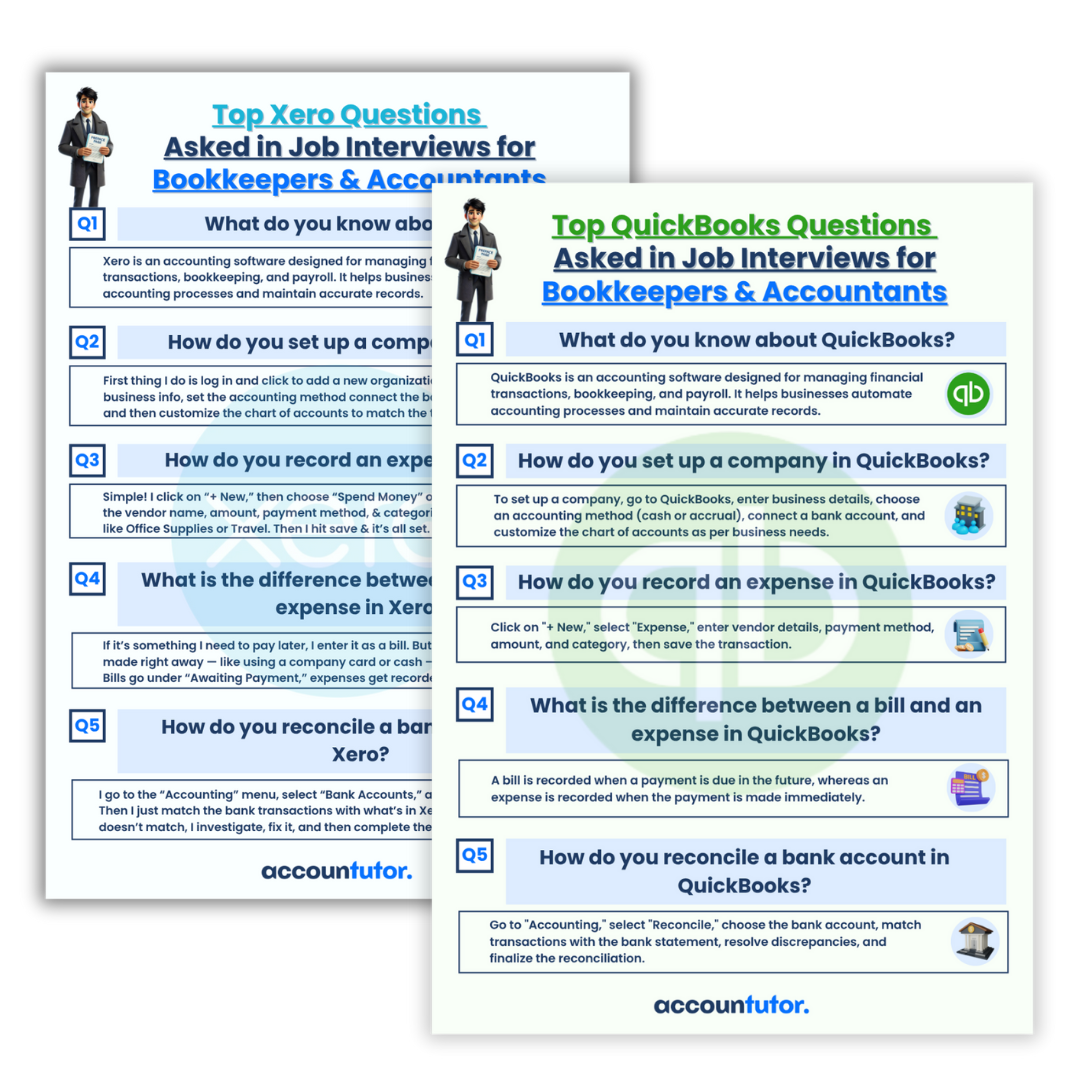
Such training helps you master the integration of AI with popular tools like QuickBooks and Xero, potentially saving you hours each week. 
By leveraging these skills, you gain the confidence to excel as a modern bookkeeper or accountant. 
Frequently Asked Questions (FAQs)
Q1: Will generative AI replace bookkeepers and accountants?
A: No, generative AI serves as a powerful assistant. It automates repetitive tasks, allowing professionals to focus on strategic analysis, client relationships, and complex problem-solving. It enhances efficiency rather than replacing human expertise.
Q2: How accurate is AI for generating financial information like journal entries?
A: AI can generate highly accurate journal entries if provided with clear and precise prompts. However, human oversight and verification remain crucial to ensure compliance and correctness, especially in financial reporting. Always double-check outputs.
Q3: Is it safe to input client financial data into AI tools?
A: Data privacy and security are paramount. Always use AI tools with robust security features and adhere to strict confidentiality protocols. Never input sensitive client data without ensuring the platform’s compliance with relevant data protection regulations and your firm’s policies.
Q4: What’s the best way to get started with using AI in bookkeeping?
A: Begin by experimenting with simple tasks like drafting emails or summarizing short reports. Consider taking a specialized course that teaches effective prompt engineering and practical applications of AI in finance to build foundational skills.
Q5: Can AI help me learn accounting concepts?
A: Yes, AI can effectively explain complex accounting concepts, provide illustrative examples, and even help you understand specific rules like debits and credits. It can be a valuable learning aid for both aspiring and experienced financial professionals seeking to deepen their understanding.
Keywords: generative AI, financial reporting, bookkeeping, ChatGPT, accounting, AI in finance, financial technology, QuickBooks, Xero, AI checklist