ChatGPT has rapidly transformed how many professionals approach their daily tasks, and the accounting sector is no exception. Firms now leverage this powerful AI for everything from ensuring compliance to automating complex data analysis. If you’re wondering how to harness its capabilities, you’ve come to the right place.
This article explores 13 innovative ways accounting firms can integrate ChatGPT to significantly boost their efficiency and enhance client services. We’ll dive into practical applications, offering you actionable strategies.
What Exactly Is ChatGPT?
ChatGPT is a sophisticated large language model that you interact with through a straightforward chat interface. It stands out as one of the most widely adopted AI tools across finance and accounting teams. Instead of relying on rigid commands, you communicate with it using natural, conversational prompts.
This AI excels at automating many manual and repetitive tasks. For example, it effortlessly generates text like client emails and quickly summarizes lengthy documents. ChatGPT also personalizes responses for client inquiries and assists with research, such as tracking regulatory updates. Furthermore, it proofreads text for writing improvements and generates fresh ideas for marketing materials or industry trends.
How Can ChatGPT Benefit Your Accounting Firm?
Integrating ChatGPT offers several compelling advantages for accounting firms. It streamlines operations and significantly improves client interactions.

1. Reduce Manual Tasks
ChatGPT can significantly cut down on tedious, manual tasks, freeing up valuable time for your team. Imagine reducing hours spent on writing email replies, analyzing journal entries, drafting blog posts, or preparing financial reports. This automation directly boosts productivity, allowing your team to focus on higher-level, strategic work.
For instance, ChatGPT can swiftly identify discrepancies between invoiced amounts and purchase orders. When you provide the right data and context, it performs these checks with impressive speed. You can upload accounting data and ask, for example, ‘Can you help automate the process of checking discrepancies between invoiced amounts and purchase orders?’
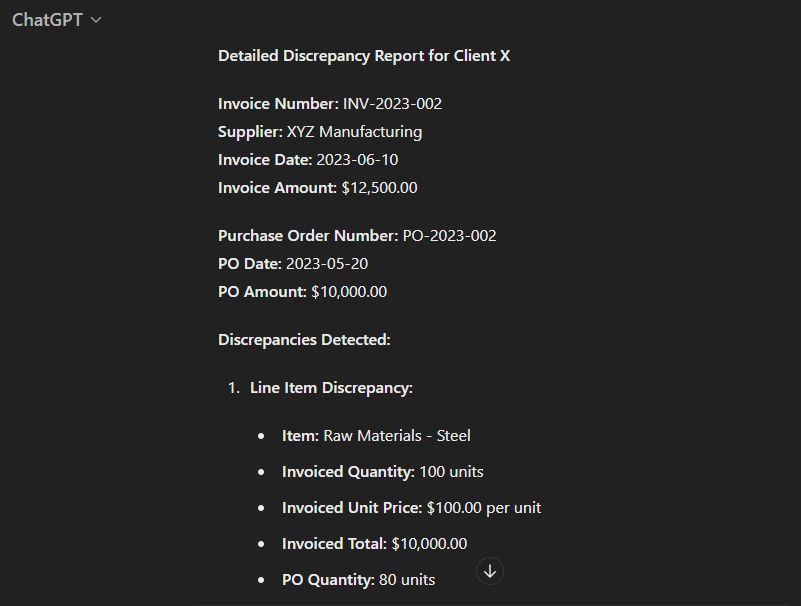
As you can see, ChatGPT analyzes financial data in seconds. This task is often tedious and prone to human error, but a well-crafted prompt makes it considerably easier.
2. Improve Client Experience
ChatGPT proves to be an invaluable tool for enhancing your client experience, a benefit closely linked to task reduction. It ensures a professional tone and consistency across all your firm’s communications. This creates a uniform and reliable interaction for every client.
Furthermore, ChatGPT delivers rapid responses, which is especially beneficial during peak seasons. The tool can draft emails, allowing your team to address client concerns and inquiries almost instantly. Many firms utilize it extensively to communicate with members, partners, and vendors.
While it may not always provide the exact response you prefer, it consistently offers a strong starting point to improve customer service.
3. Assist with Training and Learning
The accounting industry demands continuous learning, from new concepts to evolving regulations and emerging technologies. ChatGPT offers instrumental support for ongoing professional development. It simplifies complex topics and provides clear explanations.
For example, ChatGPT excels at offering simple explanations and examples to enhance comprehension. You can request hypothetical scenarios or case studies for analysis and interpretation. It also provides insights into specialized topics like forensic accounting, tax planning strategies, or risk management techniques.
13 Ways Accounting Firms Can Use ChatGPT
Here are practical strategies for integrating ChatGPT into your accounting practice to boost efficiency and effectiveness.
1. Blog Post Creation
ChatGPT can assist you in creating informative blog posts about accounting topics. However, avoid relying on it to generate entire articles from scratch. Instead, use it as a powerful co-pilot.
Leverage ChatGPT to brainstorm article ideas, create outlines, check for grammatical errors, and get SEO suggestions. Remember to use specific prompts to ensure unique, high-quality content, avoiding generic outputs.
For example, try a prompt like this: ‘I want you to write in a voice that’s authoritative yet informal and straightforward. The tone should be conversational and personable, incorporating personal anecdotes when relevant. Your language should be clear, concise, and casual, focusing on business advice or insights, especially in accounting and business growth. Always aim to address the reader directly to build a connection and keep them engaged. Your style should typically present a problem or issue first, then guide the reader to a resolution with clear, actionable advice.’

When you ask ChatGPT to rewrite paragraphs or a whole blog post draft with such a detailed style guide, you’ll receive a result like this:

This distinctive writing style resonates better with readers than generic, unprompted content. It ensures your firm’s unique voice shines through.
2. Drafting Emails to Clients
ChatGPT empowers firm owners to draft personalized emails for clients efficiently. You can create a set of prompts that provide basic client information and email requirements. Include details like the client’s first name, industry, the email’s purpose, and specific concerns or calls to action.
Your prompt can be as simple as: ‘Write an email reminder to a client about an upcoming deadline for filing their quarterly tax return. The email should be professional yet casual, reminding the client of the approaching deadline and requesting them to submit the necessary documentation as soon as possible. Include a friendly closing and sign off with your name.’

In mere seconds, you have a fresh draft ready for any necessary edits. This significantly speeds up client communication.
3. Transform Loom Videos into SOPs
Loom videos are excellent for quick explanations, but converting them into Standard Operating Procedures (SOPs) can be time-consuming. ChatGPT offers a brilliant solution to this challenge. Simply copy and paste the transcript from your Loom video into ChatGPT.
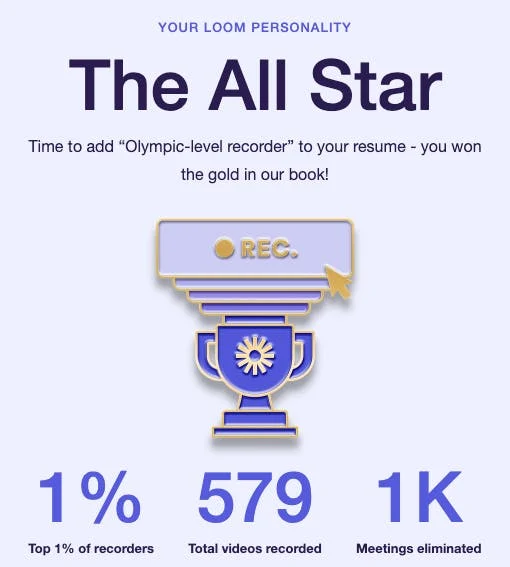
Then, instruct the AI to summarize it into a clear, step-by-step SOP. This process drastically reduces the effort required to document your workflows.
4. Convert PDF Data to Excel
Manually extracting data from PDF files into Excel is a notoriously time-consuming process. ChatGPT can significantly streamline this. Begin by copying and pasting the data directly from your PDFs into the chat interface.
Next, ask ChatGPT to format the extracted information into a structured table. This table will be perfectly prepared for easy insertion into an Excel spreadsheet. With the advanced capabilities of GPT-4, you can now upload files directly, making the entire experience even more convenient.
5. Categorize Unclassified Bank Transactions
ChatGPT can dramatically accelerate bookkeeping by reviewing transactions and suggesting appropriate categories. Simply enter the transactions into the chatbox. You can then accept or adjust the suggestions as needed, updating your financial records swiftly.
This method saves considerable time and improves accuracy, reducing the chance of errors. For example, if you input: ‘I have some transactions I need to review and categorize for my business expenses. Date: May 15 2024 Amount: $45.00 Description: Office Depot – Printer Ink’, ChatGPT will provide an output like the one below. This also demonstrates how to use ChatGPT for journal entries by efficiently categorizing and recording financial movements.

6. Social Media Content
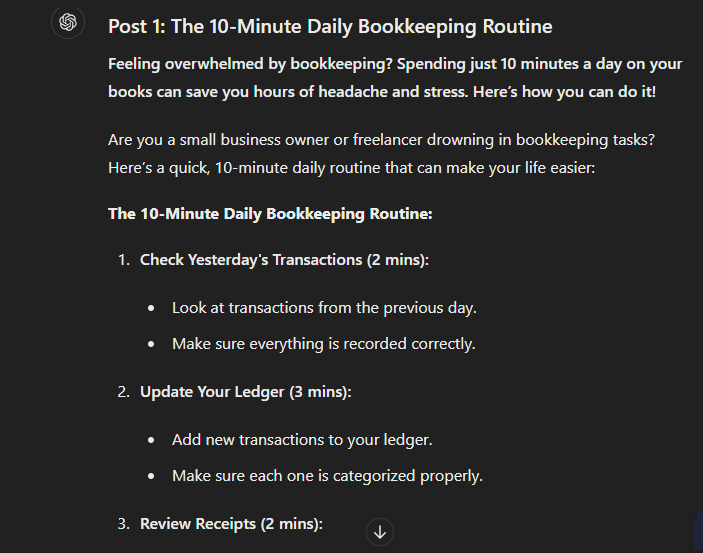
Building an online presence through social media presents a significant challenge, especially with the constant demand for fresh, engaging content. Yet, establishing your firm’s space on these platforms is crucial, considering billions of people actively use social media. ChatGPT can help you create compelling social media posts that resonate with your target audience.
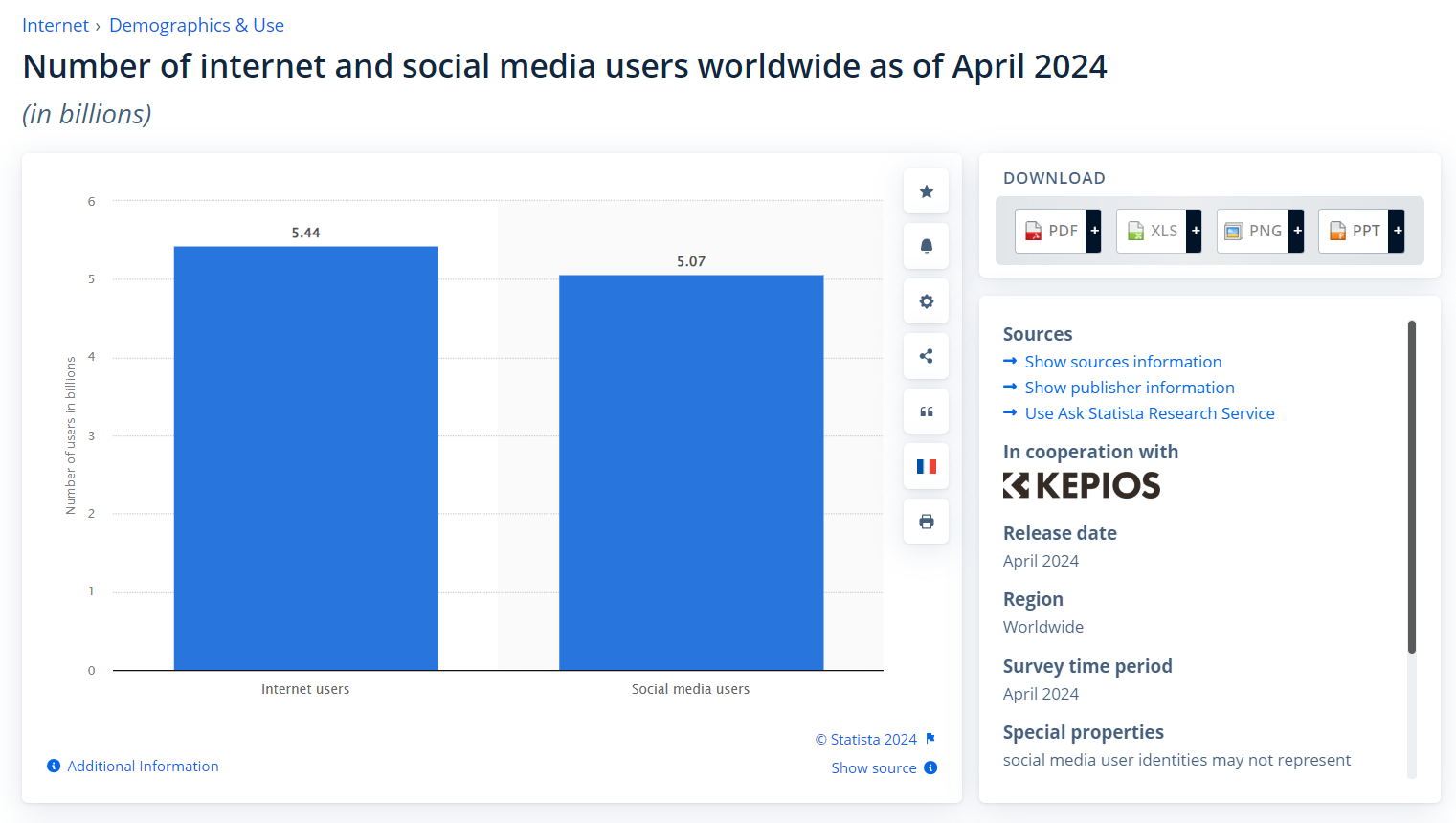
You can fine-tune your prompts, adjust the tone, and experiment with other aspects until you achieve optimal results. While you will likely need to edit the output, ChatGPT provides an excellent foundation for your social media strategy.
7. Summarize Meeting Notes
ChatGPT excels at summarizing meeting notes, transforming lengthy discussions into concise, actionable points. First, record your meeting using a tool that offers transcription capabilities, like Loom. If your tool doesn’t provide this, upload the recording to a transcription service to obtain a text version.
Once you have the transcription, input it into ChatGPT with a prompt like: ‘Summarize the following meeting notes, focusing on key decisions, action items, and important points discussed: [Paste the transcribed text here]’. This process delivers a clear summary, as demonstrated in the sample below.

8. Resolve Excel Formula Issues
Have you ever forgotten a specific Excel formula or how to input it correctly? ChatGPT can provide step-by-step instructions. Simply describe the task or calculation you need to perform, and ChatGPT will deliver the appropriate formula, making your financial reporting faster and easier.
For instance, if you ask it how to calculate compound interest in Excel, it will provide a clear answer like this:

For even more advanced assistance, explore custom GPTs designed for specific Excel tasks, though some may have limitations for free users.

9. Streamline Market Research
ChatGPT can significantly reduce the time you spend on market research. It summarizes reports and articles, answers specific questions about provided content, and generates valuable insights from data. It can even recommend additional resources for deeper dives.
For example, you can conduct a competitor analysis using ChatGPT. First, gather names, news articles, financial reports, and press releases related to your competitors. Then, provide all this data to the AI and instruct it to summarize the information. Based on the input, you can ask specific questions like these:

If you subscribe to a paid ChatGPT plan, you can also leverage its deep research model, ChatGPT 4.5, for even more comprehensive analysis.

10. Craft Email Signatures for Marketing
An often-overlooked marketing tool for accounting firms is the email signature. It offers a subtle yet effective way to promote your services. If you’re unsure what to include, ChatGPT can generate a list of creative ideas tailored to your firm’s objectives.

For instance, you could ask: ‘Can you send me a list of possible email CTAs for an accounting firm targeting SaaS startups?’ You’ll receive results similar to the one below, giving you options to choose the most compelling call to action.

11. Develop Effective Case Studies
Case studies stand out as highly effective marketing tactics because they provide intricate details about how your services benefit clients. ChatGPT can significantly assist in creating client case studies. All you need to do is include specific details in your prompt about your clients, the challenges they faced, and how your company provided solutions.
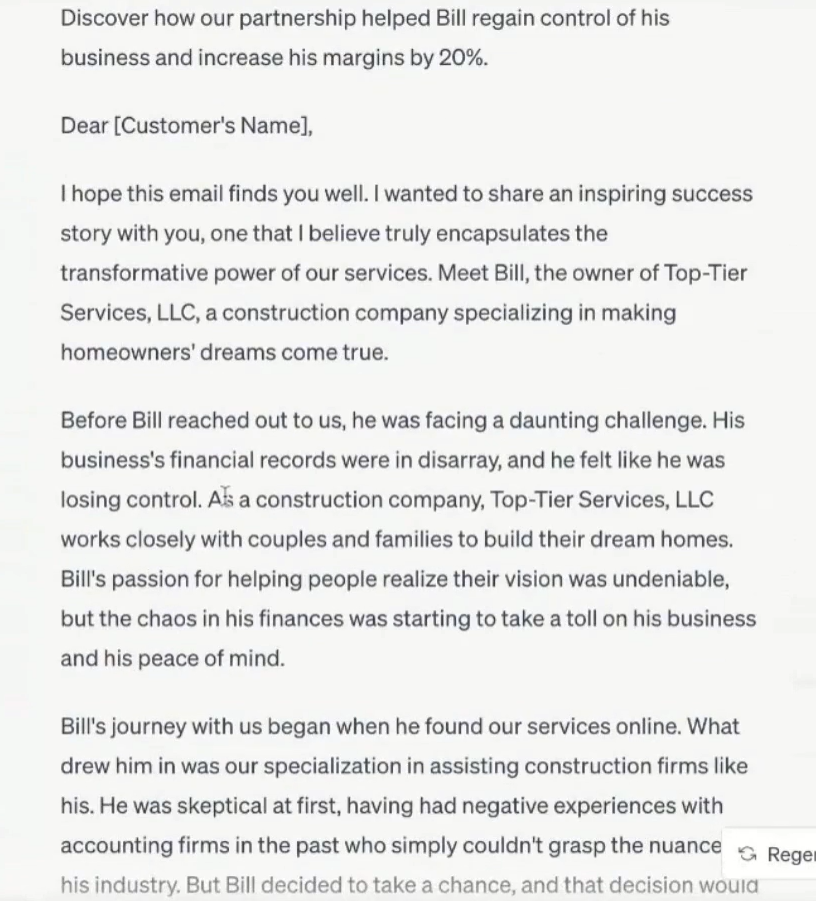
The result, as seen in the example, will be a nearly complete draft that you can then tweak for perfection. This speeds up content creation while maintaining quality.
12. Create Monthly Executive Summaries
Using ChatGPT to summarize information for monthly executive summaries streamlines the process, ensuring clarity and conciseness. Before providing any data, always anonymize sensitive information to safeguard privacy. First, gather all relevant data and reports for your summary, including financial statements, key metrics, budget analysis, and major transactions.
Next, prepare your input by clearly labeling each section of the data to help ChatGPT understand the context. For example, you might structure data on revenue, expenses, and key highlights. Then, input your organized data and prompts into ChatGPT to generate the summaries.
Ensure you specify the required tone and length (e.g., concise, professional) and avoid mentioning client names or sensitive data for security. Here’s how a prompt and output might look:

Carefully review the summary generated by ChatGPT for accuracy and completeness. Make any necessary adjustments to your prompts to ensure the output aligns with your expectations and the recipients’ needs.
13. Simplify Tax Regulations
Navigating complex tax regulations can be daunting, but ChatGPT offers a solution by interpreting and summarizing them. This makes it significantly easier for accountants to understand and apply the rules. For example, you could use a prompt like: ‘Can you summarize Section 179 of the new tax regulations regarding small business deductions in a more digestible manner?’
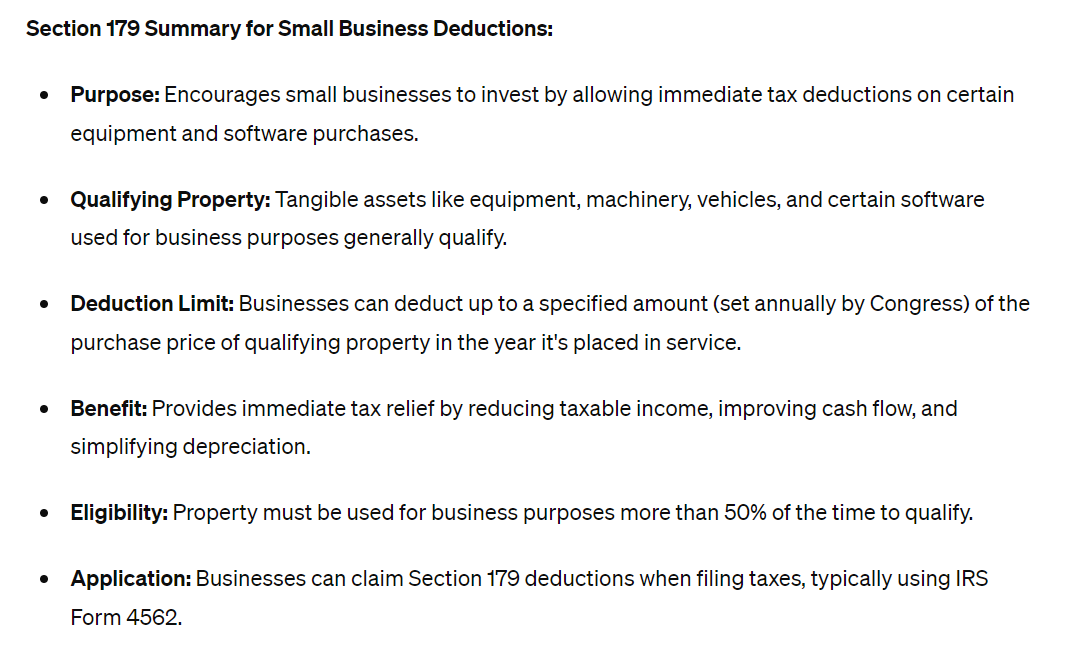
ChatGPT can also assist with computations. For instance, you might ask it to: ‘Calculate the tax liability for a business with the details below: Annual revenue: $500,000 Deductible expenses: $200,000 Depreciation expense: $30,000 Tax credits: $10,000 Applicable tax rate: 21%’. It will provide an accurate answer quickly, enhancing efficiency in tax planning and compliance.
Risks of Using ChatGPT in Accounting
While ChatGPT offers numerous benefits, accounting firms must also acknowledge and mitigate certain risks. Understanding these potential pitfalls ensures responsible and effective AI integration.

AI Errors
A significant risk associated with using ChatGPT, and AI in general, in accounting is the potential for errors without adequate human oversight. While AI efficiently processes vast amounts of data and generates insights, it can still make mistakes. These errors might go unnoticed without a thorough manual review by a qualified professional.
Generic Results
ChatGPT is a powerful machine learning tool capable of incredible learning, but it often produces generic content without sufficient human input. Solely relying on AI for marketing efforts can result in bland, ‘cookie-cutter’ content that fails to capture audience attention. While ChatGPT cannot fully automate all business aspects, it saves substantial time with the right prompts and proper oversight.
Data Security
Security risks are a critical concern when using ChatGPT and other AI models, especially with sensitive financial data. Once you input financial data or other confidential information into any system, you must consider its security implications. Always prioritize data anonymization and adhere to strict privacy protocols to protect client information.
FAQ
Q1: Is ChatGPT safe for handling sensitive financial data?
A1: You should exercise extreme caution when handling sensitive financial data with ChatGPT. Always anonymize or generalize data before inputting it. Avoid sharing confidential client-specific information directly with the AI to prevent security breaches.
Q2: Can ChatGPT replace human accountants?
A2: No, ChatGPT cannot replace human accountants. It serves as a powerful tool to automate repetitive tasks, assist with research, and improve efficiency. Human accountants remain essential for critical thinking, complex problem-solving, ethical judgment, and client relationship management.
Q3: How can I ensure ChatGPT produces unique content?
A3: To ensure ChatGPT produces unique content, provide highly specific and detailed prompts, including desired tone, style, and key insights. Always review and edit the generated content, adding your firm’s unique perspective and expertise to make it truly original.
Q4: What is the best way to get accurate Excel formulas from ChatGPT?
A4: Clearly describe the exact calculation or task you need to perform in Excel. Provide context, such as cell references or data types, if relevant. For complex scenarios, break your request into smaller, more manageable questions to get precise formula suggestions.
Q5: How can ChatGPT help with compliance tasks?
A5: ChatGPT can summarize complex regulatory documents, explain specific tax codes, and help draft internal compliance guidelines. However, always verify its output with official legal and accounting resources, as AI can sometimes misinterpret nuanced regulations.
Conclusion
ChatGPT presents an incredible opportunity for accounting firms to revolutionize their operations. By strategically leveraging this AI, you can automate mundane tasks, enhance client communication, and streamline complex processes. Remember to approach its use with a clear understanding of its capabilities and limitations, particularly regarding data security and the need for human oversight. Embrace ChatGPT as a powerful assistant, and watch your firm achieve new levels of efficiency and service excellence.
Keywords: ChatGPT for accounting, AI in finance, accounting automation, journal entries with ChatGPT, tax compliance AI, client communication AI, SOP creation, Excel formulas ChatGPT, market research AI, accounting firm efficiency